
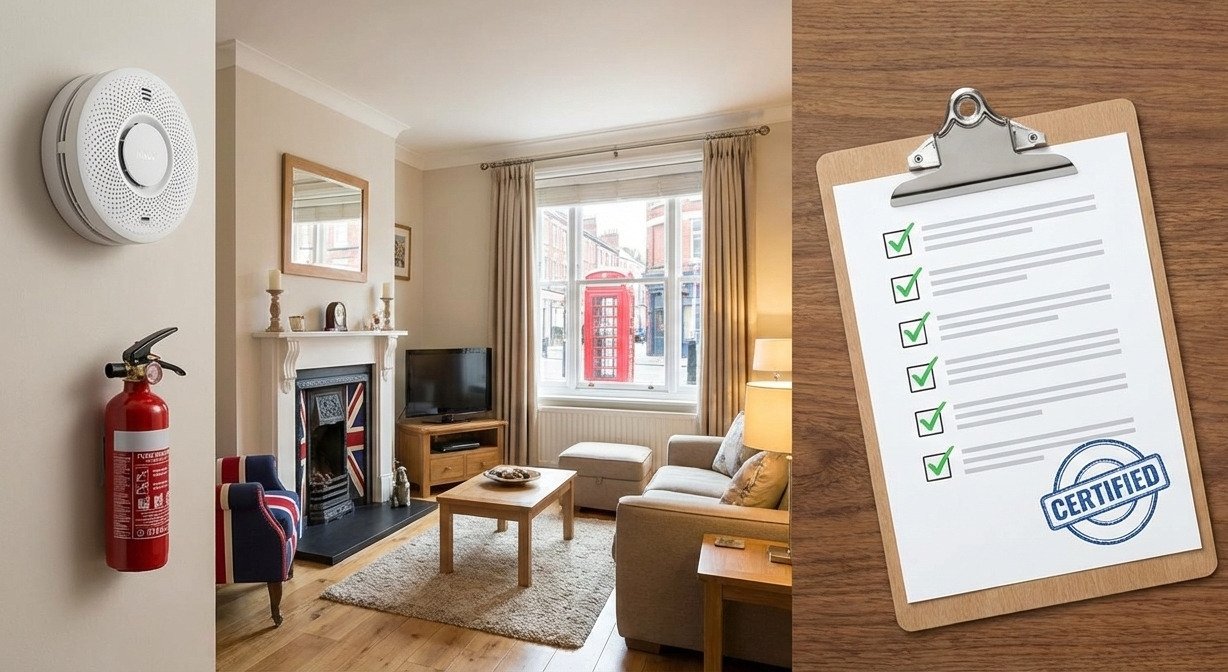
Fire safety compliance is becoming a major focus for short-term rentals across the UK. As regulations tighten and enforcement increases, Airbnb hosts must ensure their properties meet updated fire safety standards — not just for guest safety, but also to remain insured and legally protected.
With new expectations rolling into 2026, understanding your responsibilities as a host has never been more important.
Why Fire Safety Is a Bigger Issue in 2026
Short-term rentals are now firmly on the radar of local councils, insurers, and safety authorities. As Airbnb properties operate more like commercial accommodation than private homes, hosts are increasingly expected to meet higher safety standards.
Failure to comply can result in:
-
Invalid insurance claims
-
Council enforcement action
-
Listing suspension or removal
-
Serious legal liability in the event of an incident
Key Fire Safety Requirements UK Hosts Must Follow
Smoke Alarms
All Airbnb properties must have working smoke alarms installed on every level of the property. These must be:
-
Properly positioned
-
Regularly tested
-
Maintained in working condition
Carbon Monoxide Detectors
Any property with gas appliances, solid fuel burners, or open fires must have carbon monoxide alarms installed in relevant rooms.
This is now a critical requirement for both safety compliance and insurance cover.
Fire Extinguishers & Fire Blankets
While not mandatory for all properties, fire extinguishers and fire blankets are increasingly expected in:
-
Flats
-
HMOs
-
Larger Airbnb properties
-
Buildings with shared access
They should be clearly visible and easily accessible.
Clear Escape Routes
Guests must be able to exit the property safely in the event of a fire. Hosts should ensure:
-
Escape routes are clearly defined
-
Hallways and exits are unobstructed
-
Emergency exit information is provided
In multi-storey properties, this is especially important.
Fire Risk Assessments
Hosts operating:
-
HMOs
-
Apartment buildings
-
Serviced accommodation units
-
Properties with shared areas
may be legally required to carry out a fire risk assessment. Even where not mandatory, having one completed is strongly recommended.
Why Compliance Matters for Insurance
Many hosts don’t realise that fire safety compliance directly affects insurance validity. In 2026, insurers are increasingly requesting evidence of:
-
Alarm installation
-
Maintenance records
-
Fire risk assessments
If a claim arises and safety standards are not met, insurers may refuse to pay out — leaving hosts fully exposed.
What Airbnb Hosts Should Do Now
To stay compliant and protected, UK hosts should:
-
Review fire safety equipment across all listings
-
Replace outdated or non-working alarms immediately
-
Document safety checks and maintenance
-
Update house manuals with emergency instructions
-
Seek professional advice for complex properties
Being proactive now can prevent serious issues later.
Fire Safety Is Also a Guest Trust Issue
Guests are becoming more safety-aware. Clear safety measures:
-
Improve guest confidence
-
Reduce complaints
-
Protect reviews
-
Strengthen long-term hosting performance
Professional safety standards are no longer optional — they are part of running a sustainable Airbnb business.
Final Thoughts
As fire safety regulations evolve heading into 2026, UK Airbnb hosts must adapt quickly. Compliance isn’t just about ticking boxes — it’s about protecting guests, safeguarding your income, and future-proofing your hosting business.
At AllthingsBNB, we’ll continue to keep UK hosts informed on regulation changes, compliance requirements, and best practices for safe, successful hosting.