
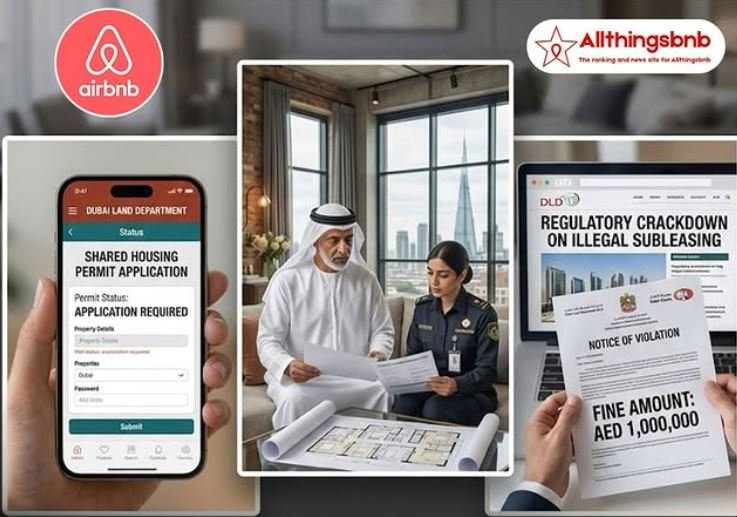
Dubai has just fundamentally redrawn the lines for the residential rental market. His Highness Sheikh Mohammed bin Rashid Al Maktoum recently issued Law No. (4) of 2026, a sweeping regulation designed to move shared housing from the "shadows" into a strictly monitored, formal economy.
For property owners and residents, the days of "informal" bed spaces and unrecorded partitions are officially over. Here is the breakdown of the most significant changes hitting the Dubai real estate market this year.
⚠️ What’s Changing: The Core Pillars
The new law isn't just a guideline—it's a complete restructuring of how "Shared Housing" (units where multiple unrelated people reside) operates.
1. Subleasing by Tenants is Now Illegal
One of the most critical updates is the absolute ban on tenants subletting their space.
-
The Rule: Only the property owner or a licensed establishment (authorized by the Dubai Land Department) can lease or manage shared units.
-
The Impact: If you are a tenant renting a 3-bedroom apartment and you decide to "rent out a room" to a friend without being a licensed management firm, you are in direct violation of the law.
2. The "Permit First" Requirement
You can no longer simply designate a property as "shared."
-
The Process: No person or entity can allocate a unit for shared housing without obtaining an official permit from Dubai Municipality.
-
Duration: Permits are typically valid for one year (owners can request two) and must be renewed 30 days before expiry.
3. Strict Occupancy & Safety Standards
To eliminate "slum-like" conditions in high-density areas, the law sets hard limits on:
-
Space Per Resident: Minimum square footage requirements are now enforced (typically 5 square meters per person).
-
Facilities: Units must meet specific technical standards for fire safety, sanitation, and electrical systems.
-
Overcrowding: Units exceeding the "maximum occupancy" listed on their permit face immediate fines and potential eviction.
💰 The Penalties: A AED 1 Million Warning
Dubai is signaling its intent to enforce these rules aggressively with some of the heaviest fines the sector has ever seen.
-
Initial Violations: Fines range from AED 500 to AED 500,000, depending on the severity and type of unit.
-
Repeat Offenses: If the same violation occurs within one year, the fine doubles—reaching up to AED 1 million.
-
Additional Sanctions: Beyond the cash penalty, authorities can:
-
Disconnect public utilities (DEWA).
-
Revoke commercial licenses for management firms.
-
Evict all residents from non-compliant units.
-
Suspend the property’s rental activity for up to six months.
-
🗓️ The Grace Period: Act Now
The law takes effect 180 days from its publication in the Official Gazette (expected to be fully operational by late 2026).
-
Existing Operators: If you are currently managing shared housing or bed spaces, you have one year from the effective date to bring your units into full compliance, secure your permits, and register your contracts.
💡 What This Means for AllThingsBnB Hosts
While this law primarily targets long-term "shared housing" (labour accommodation and budget bed spaces), it creates a cleaner market for legitimate short-term rental hosts.
-
Lower Competition from "Illegal" Rentals: By wiping out unlicensed, overcrowded partitions, the demand for legitimate, high-quality STRs and licensed shared units will likely rise.
-
Verify Your Management Partners: If you use a third-party company to manage your Dubai units, ensure they hold the specific "Licensed Establishment" status required under Law No. 4.
-
Registration is King: Ensure every single occupant is recorded in the electronic shared housing registry managed by the Dubai Land Department (DLD).
Is this the end of "affordable" living in Dubai, or a much-needed step for resident safety? Join the discussion in the comments below!
Stay Compliant: At AllThingsBnB, we recommend all Dubai-based owners audit their current lease structures immediately to avoid the "million-dirham mistake."