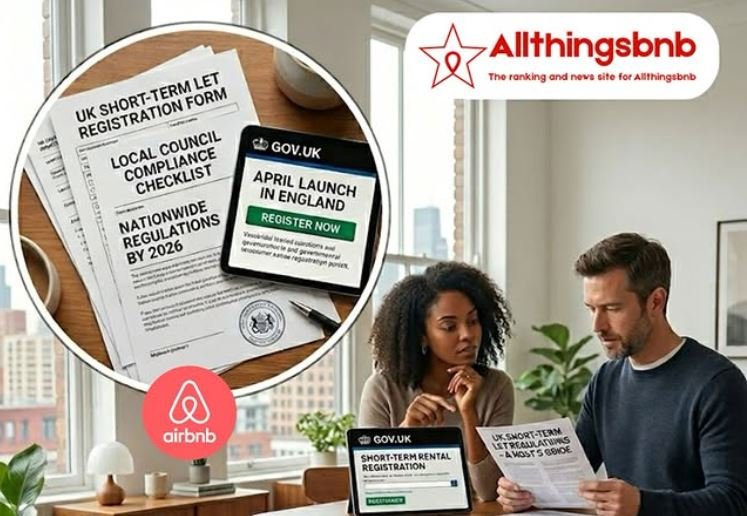
The landscape for short-term rentals (STRs) in the UK is undergoing its most significant transformation in decades. By the end of 2026, new regulations will be active across England, Scotland, Wales, and Northern Ireland.
At All Things BNB, we want to ensure you are prepared for these changes so your hosting business remains compliant and successful. Here is a breakdown of what is coming to your corner of the UK.
England: The National Registration Scheme
The UK government is introducing a mandatory national registration scheme for all short-term and holiday let properties, expected to launch in Spring 2026.
-
Registration Numbers: Every short-term let and holiday let property in England will need to be registered on a central government database. Each property will receive a unique registration number that must be displayed on all online listings, including Airbnb, Booking.com, and Vrbo.
-
Planning Use Class: A new "C5" planning use class for short-term lets is being introduced. While many existing hosts may be automatically reclassified, local councils will have the power to restrict new holiday lets in high-pressure areas using "Article 4" directions.
-
Compliance Monitoring: The registration system is designed to give local authorities clear visibility of short-term let concentrations and to improve enforcement of safety and legal standards.
Scotland: Licensing and Control Areas
Scotland has been a frontrunner in STR regulation, and by 2026, the transitional period for existing hosts has concluded.
-
Mandatory Licensing: You cannot legally accept bookings or receive guests without a short-term let license from your local council. Operating without one can result in fines of up to £2,500.
-
Public Registers: Details of all license applications are available via council public registers, which are updated at least quarterly.
-
Control Areas: High-demand regions like Edinburgh and parts of the Highlands are designated "Control Areas," where planning permission is generally required to change a home into a full-time holiday let.
Wales: Statutory Registration and the Visitor Levy
Wales is introducing a system to manage its tourism sector effectively, with major milestones scheduled for Autumn 2026.
-
Mandatory Registration: Starting in Autumn 2026, all visitor accommodation providers in Wales must register with the Welsh Revenue Authority (WRA). This registration will be free of charge and aims to provide better data on the tourism sector.
-
The Visitor Levy: This legislation allows local authorities to introduce a small visitor levy (tourist tax) on overnight stays. While registration begins in 2026, the earliest a levy could be implemented by a council is April 2027.
-
Public Accountability: Parts of the register will be publicly available, allowing guests and residents to verify that a property is properly registered.
Northern Ireland: Certification and New Legislation
In Northern Ireland, a new system for regulating short-term lets is due to begin in May 2026.
-
Short-Term Letting Register: A new online register, maintained by Fáilte Ireland, will launch on May 20, 2026. If you rent your property for stays of up to 21 nights, you must register and display your unique number on all advertisements.
-
Tourism NI Certification: In addition to new registry rules, hosts must maintain their statutory certification from Tourism NI.
-
Planning Permission: Homeowners letting out an entire primary residence for more than 90 days a year, or letting a second property, will generally require planning permission from their local authority.
How to Prepare Your Hosting Business
The era of unregulated hosting is ending. Here is how to future-proof your business:
-
Audit Your Paperwork: Ensure all safety certificates (Gas, Electric, Fire Risk) are current and digitally stored.
-
Verify Planning Status: Check if your property falls within a "Control Area" or "Rent Pressure Zone" that might limit your nights or require a change of use permit.
-
Ready Your Listings: Be prepared to update your property descriptions with your registration or license number as soon as your local scheme goes live.
-
Stay Informed: We will continue to track these updates at All Things BNB.
The goal of these new rules is to ensure a high standard of safety and to manage the impact of tourism on local communities. Professional hosts who embrace these changes early will likely see higher trust from guests and more sustainable long-term growth.
Get More Updates
Regulations move fast. For the latest deep dives into UK hosting laws, tax changes, and market trends, keep an eye on allthingsbnb.com.