
There was a time when running a short-term rental portfolio required little more than keeping an eye on your bank account and occasionally checking your calendar. If the nights were full and the payouts cleared, you were winning.
But as the 2026 vacation rental market undergoes a massive shift toward professionalization and tighter equilibrium, operating on "gut instinct" has become an expensive mistake. National averages have stabilized, and while average daily rates (ADRs) remain remarkably resilient, the revenue gap between casual hosts and professional operators has widened to an impressive 20-30%.
The differentiator isn't just having access to raw information—it's how you interpret it. Every booking, guest inquiry, dynamic pricing shift, and cleaning turnaround yields a trail of metrics. If you're looking at those metrics as a flat spreadsheet, you're missing the bigger story.
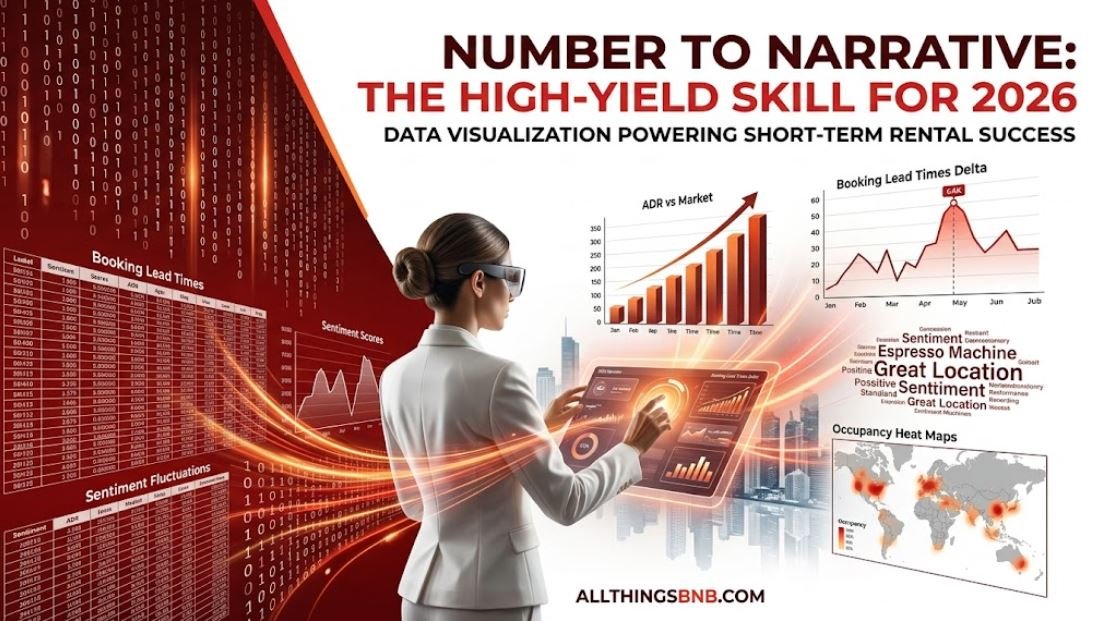
To optimize your yield this year, you need to turn raw columns of data into visual, actionable narratives. Here is how the top operators are utilizing data visualization to build full calendars and protect their margins.
The Power of the Dashboard: Moving Beyond the Spreadsheet
Raw numbers hide micro-trends. A spreadsheet might show a healthy quarterly revenue figure, but it won't visually isolate a sudden 4-day dip in mid-week occupancy or a pricing lag during a local convention weekend.
Modern hosts are shifting away from native platform dashboards and building custom business intelligence layouts using tools like Power BI, Tableau, or Google Looker Studio connected directly to their Property Management System (PMS) APIs.
  [ Raw Property Data ] ──► [ Custom BI Dashboard ] ──► [ Immediate Operational Shift ]
  • Guest Lead Times        • Occupancy Heat Maps       • Targeted Mid-Week Promos
  • Dynamic Price Deltas    • Sentiment Word Clouds      • Amenity Upgrades via Trends
  • Review Score Fluctuations • Lead-Time Line Charts    • Dynamic Pricing Corridors
By consolidating these streams into visual formats, you instantly see the operational reality of your portfolio.
3 Core Visual Analytics That Directly Boost Yield
1. Booking Lead-Time Delta Maps
A simple line chart tracking your booking lead times tells you when your guests prefer to secure their stays relative to their check-in dates.
-
The Story: If your visual lead-time tracking reveals that your high-value corporate guests consistently book exactly 12 days before arrival, you know not to panic-drop your rates 3 weeks out.
-
The Action: You can safely hold your premium pricing corridor, knowing your exact demand wave hasn't even hit the horizon yet.
2. Competitor Pricing Overlays
Using dynamic pricing scatter plots allows you to overlay your daily rates directly against the active market.
-
The Story: If you see your property consistently sitting at the absolute top or bottom edge of the local cluster, your pricing strategy is unaligned.
-
The Action: Visualizing these clusters in real time allows you to make precise incremental updates, capturing maximum profit per night without pricing yourself out of a busy weekend.
3. Review Sentiment Heat Maps
Instead of reading every individual review line by line every month, operators are feeding guest text feedback into sentiment graphs and word clouds.
-
The Story: A visual word cloud can quickly highlight a repeating cluster of micro-complaints—like "slow Wi-Fi" or "AC unit"—or recurring positive feedback like "espresso machine."
-
The Action: This gives you a data-backed blueprint for your next property upgrade, telling you exactly where capital expenditure will yield the highest return in guest satisfaction.
The 2026 Bottom Line
Intelligent hosting is no longer about working harder on the ground; it's about making faster, sharper adjustments behind the screen. When you transform flat data into clear, scannable visual stories, you uncover hidden profits, eliminate booking dead zones, and outpace the competition before they even notice the market has shifted.
Stop guessing what your business needs, and start letting your data show you the way.
Recommended Resource
For deeper insights into refining your short-term rental business, check out this guide on Airbnb Design Trends for 2026 which details the tangible property adjustments, decor styles, and experience-first design elements your guests are actively looking for this season.