
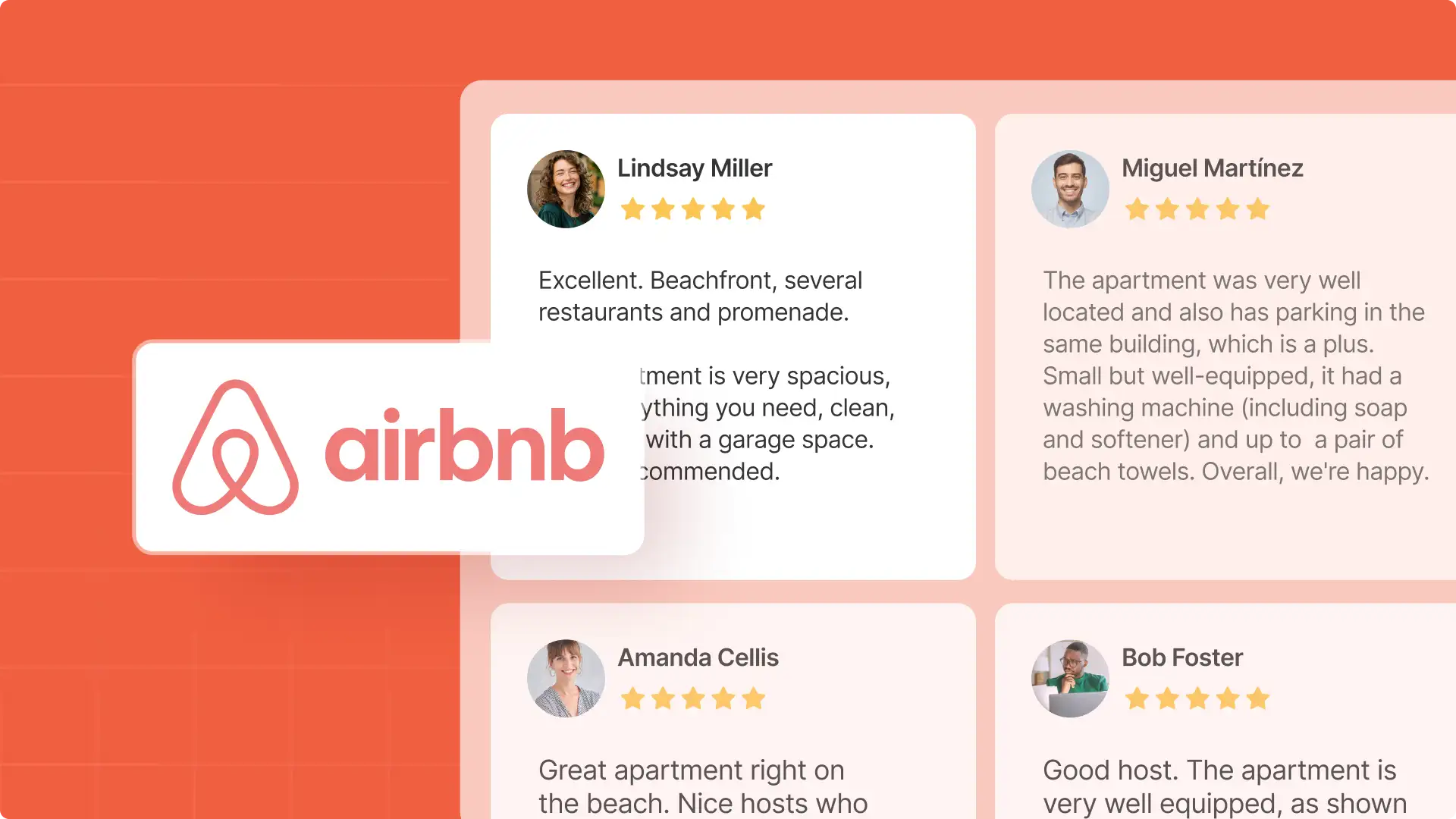
Most hosts obsess over the Star Rating. We panic if it drops from 4.9 to 4.8, and we celebrate every 5-star notification.
But while the score keeps you on the platform, the text of the review is what actually helps new guests find you.
In 2025, Airbnb’s search algorithm is smarter than ever. It doesn't just count stars; it reads. Using a technology called Semantic Search, Airbnb analyzes the specific words your guests use to understand exactly what kind of property you have—and who should see it.
Here is how review language impacts your SEO (Search Engine Optimization) and how you can use it to rank higher.
1. The Algorithm Reads "Meaning," Not Just "Keywords"
In the old days of SEO, you just needed someone to type the word "beach" for you to show up for beach lovers.
Today, Airbnb uses "Embedding-Based Retrieval." This is a fancy way of saying the system understands context. If a guest writes, "We loved watching the waves from the balcony," the algorithm knows your place has a view and is likely near the ocean, even if the word "beach" isn't in the review.
The Impact: When a potential guest searches for "ocean view," Airbnb scans your reviews for these semantic clues to decide if your listing is a good match.
2. Review Text Categorizes Your Listing
Airbnb assigns listings to specific Categories (like "Amazing Pools," "Design," or "Play") and filters (like "Dedicated Workspace"). While your amenities list matters, social proof in reviews verifies it.
If you checked the "Dedicated Workspace" amenity box, but 20 guests review your place saying, "The WiFi was spotty and the table was wobbly," the algorithm learns that your listing is a bad match for business travelers.
Conversely, if guests consistently write, "I took Zoom calls all week with no issues," Airbnb’s algorithm gains confidence in your listing and will rank you higher for guests who filter by "Work Friendly."
3. Matching "Search Intent"
Guests rarely just search for "Apartment in London." They search with an intent, often filtering for specific needs. The algorithm personalizes results based on that intent.
-
The Family Searcher: If a user filters for "Crib" and "High Chair," Airbnb prioritizes listings where reviews mention words like "safe," "baby," "kids loved it," or "walkable with a stroller."
-
The Digital Nomad: If a user filters for long stays, Airbnb prioritizes listings with reviews mentioning "fast internet," "desk," or "grocery store nearby."
If your reviews are generic ("Great stay!"), the algorithm doesn't know which "bucket" to put you in, and you may lose visibility to these specific, high-intent bookers.
4. The "Guest Favorite" Badge
The coveted "Guest Favorite" badge is heavily influenced by reliability and preventing cancelations, but it also relies on sentiment analysis.
The algorithm scans review text for negative sentiment spikes. Even a 5-star review that says, "Great place, but the street noise was unbearable at 3 AM," feeds data into the system. If multiple guests mention "noise," the algorithm tags your property as "Noisy." You might keep your 4.9 rating, but you will stop appearing for guests who prioritize "Quiet" in their search preferences.
How to Ethically Influence Review Language
You cannot (and should not) tell guests what to write. However, you can prime them to mention the features you want to rank for.
The psychological trick is to mention the specific feature in your check-out message.
Don't say:
"Please leave us a 5-star review!" (This is generic and feels transactional.)
Do say:
"We hope you enjoyed the new espresso machine and the high-speed WiFi! It was a pleasure hosting you."
The Result: By reminding the guest of these specific high-value amenities right before they write the review, they are statistically more likely to mention them.
-
Guest writes: "Loved the espresso machine!" -> Ranks higher for "Coffee" searches.
-
Guest writes: "WiFi was super fast." -> Ranks higher for "Remote Work" searches.
The Bottom Line
A 5-star rating is just the ticket to enter the game. The words in the review are how you win it.
By delivering on specific promises (like cleanliness, speed, or comfort) and subtly reminding guests of those wins, you build a library of keywords that helps Airbnb’s AI put your listing in front of the perfect guests.
Want to master the art of Airbnb SEO? Join our community of professional hosts at AllThingsBNB.com.