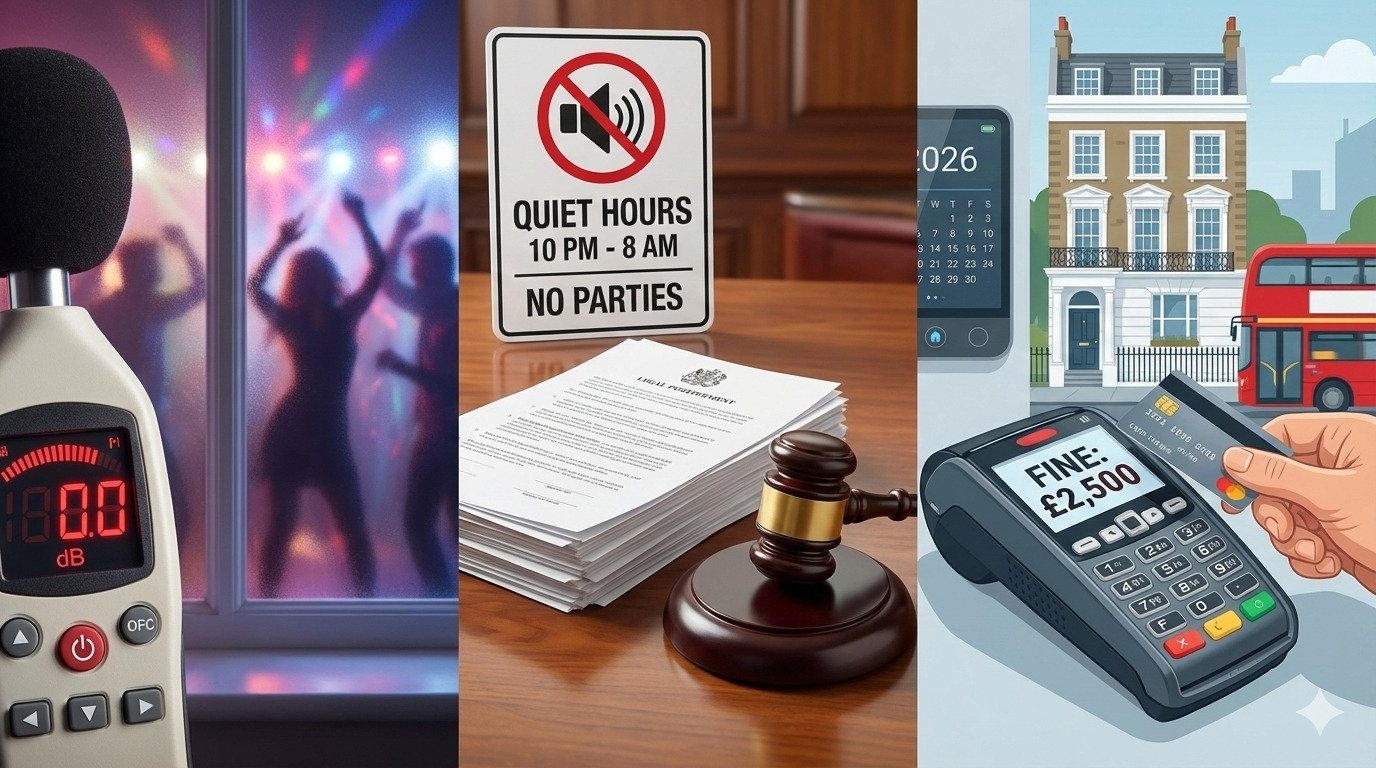
As the UK short-term rental market continues to evolve, noise complaints and party-related issues remain one of the biggest risks for Airbnb hosts in 2026. With tighter local authority enforcement, clearer Airbnb policies, and increasing neighbour awareness, hosts are now far more accountable than ever before.
For UK hosts, understanding the rules, penalties, and best-practice prevention strategies is essential to protect listings, income, and reputation.
Why Noise Complaints Matter More in 2026
Noise complaints are no longer treated as minor issues. In many UK cities and residential areas, repeated complaints can now trigger:
-
Council investigations
-
Licensing breaches
-
Airbnb account penalties
-
Financial fines
-
Listing suspension or removal
Neighbour pressure and community reporting have increased significantly, especially in apartment blocks and mixed-use developments.
Airbnb’s Party Ban: Still Strict in 2026
Airbnb’s global party ban remains firmly in place in 2026. This includes:
-
No open-invite gatherings
-
No large events or celebrations
-
No disruptive behaviour affecting neighbours
-
No unauthorised visitors
Even small gatherings can lead to enforcement action if they cause excessive noise or complaints.
Airbnb now relies heavily on pattern tracking, meaning repeated issues — even across different stays — can put a host’s account at risk.
UK Fines & Legal Consequences Hosts Should Know
Depending on the local council and severity, UK hosts may face:
-
Fixed penalty notices for noise disturbances
-
Environmental health warnings
-
Fines for breaching licence conditions
-
Enforcement action under anti-social behaviour laws
-
Loss of short-term rental licence in regulated areas
In some cases, neighbours can also escalate complaints through property management companies or freeholders, especially in leasehold buildings.
How Councils Are Enforcing Noise Rules
In 2026, enforcement is more proactive than reactive. Councils now commonly use:
-
Dedicated short-let enforcement teams
-
24-hour noise complaint reporting lines
-
Licensing audits and compliance checks
-
Data sharing with booking platforms
Urban hotspots such as London, Manchester, Birmingham, and Edinburgh remain the most closely monitored.
Best Practices for UK Hosts in 2026
Successful hosts focus on prevention, not reaction. Key steps include:
1. Clear House Rules
Set explicit rules on:
-
Quiet hours
-
Visitor limits
-
No parties or events
-
Consequences for breaches
These should be visible in your listing and pre-arrival messages.
2. Guest Screening
Short stays, weekend bookings, and local guests require extra attention. Asking simple pre-booking questions can help reduce risk.
3. Smart Noise Monitoring
Many UK hosts now use indoor noise monitoring devices that detect decibel levels without recording conversations. These act as early warnings before complaints escalate.
4. Automated Messaging
Sending polite reminder messages during evening hours can help prevent issues before they start.
5. Local Contact Availability
Some councils require a 24/7 local contact number. Even where it’s not mandatory, having one builds trust with neighbours and authorities.
What Happens If a Complaint Is Made?
If a noise complaint is reported:
-
Airbnb may issue a warning
-
Guests may be contacted or removed
-
Your listing may be temporarily restricted
-
Repeated issues can result in permanent delisting
Responding professionally and documenting actions taken is crucial.
The Cost of Ignoring Noise Issues
In 2026, ignoring noise complaints can cost more than just a bad review. It can impact:
-
Your search ranking
-
Booking volume
-
Licence status
-
Long-term hosting viability
Noise control is now part of professional hosting — not optional.
Final Thoughts
Noise complaints, party rules, and fines are one of the fastest ways for UK Airbnb hosts to lose income in 2026. Hosts who take a proactive, system-led approach are the ones who remain compliant, profitable, and neighbour-friendly.
Hosting successfully in 2026 isn’t just about guests — it’s about the community around your property.