
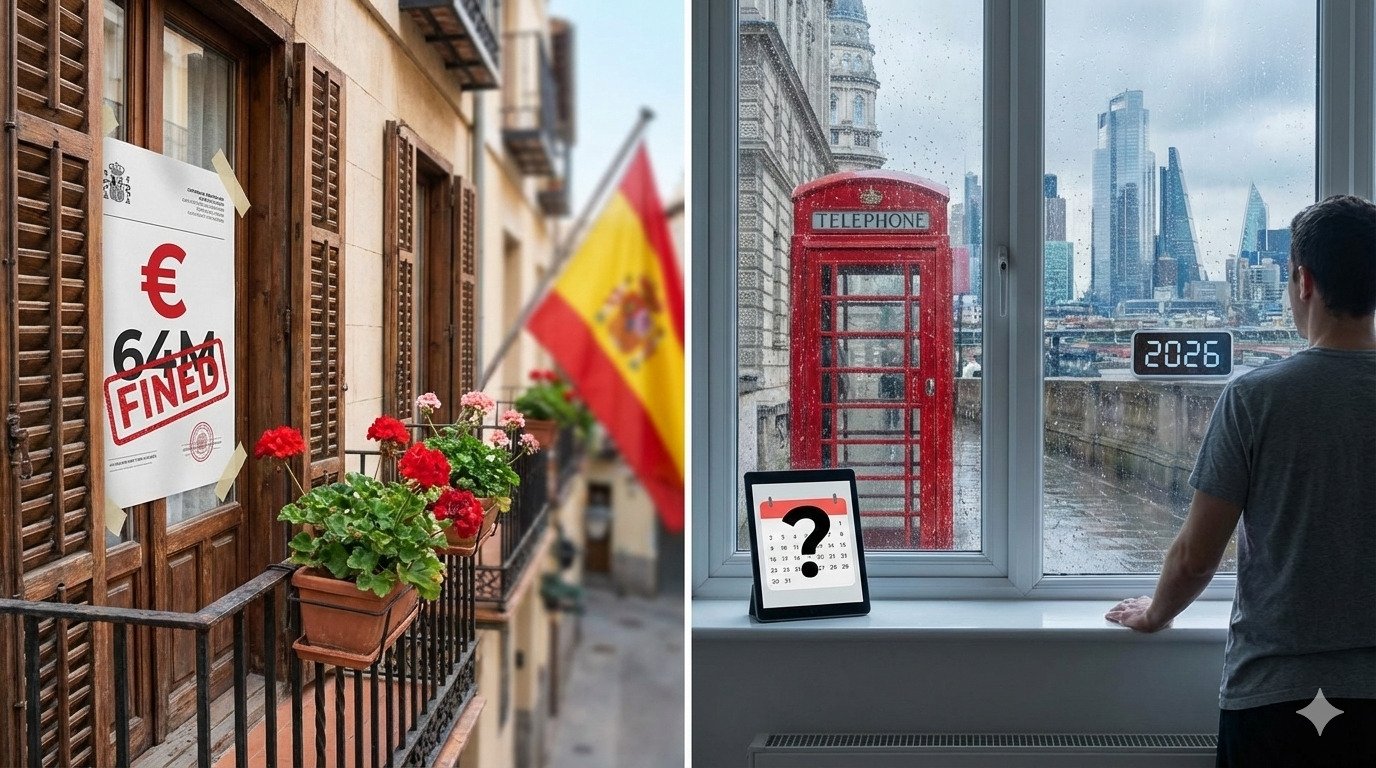
Airbnb is facing significant regulatory pressure in Europe after Spanish authorities slapped the platform with a hefty €64 million fine — roughly £55 million — for listing tens of thousands of short-term rentals that lacked the required licences or displayed incorrect registration information. This represents one of the largest penalties of its kind and highlights how governments are increasingly holding booking platforms accountable for compliance issues. Reuters+1
This development isn’t just important news for hosts in Spain — it’s a clear signal to the UK hosting community that regulatory scrutiny on short-term rentals is intensifying across Europe.
What Happened in Spain
Spanish consumer authorities determined that more than 65,000 Airbnb listings were advertised without the proper tourist accommodation licence numbers, a requirement in many regions of the country. These omissions and inaccuracies were ruled to violate consumer protection and housing laws. Airbnb was ordered to remove the irregular listings and publicly disclose the fine — which was calculated at six times the “illegal profits” generated while the non-compliant adverts remained online. Majorca Daily Bulletin
Airbnb has stated it will challenge the ruling, arguing that some obligations came into force after the listings were initially published. However, the fine has been confirmed as final under Spanish administrative law, and the company must take corrective action. Forbes España
Why This Matters Beyond Spain
This fine points to a broader shift in how governments are approaching short-term rental platforms — including those like Airbnb that straddle the line between marketplace and legal responsibility. For UK Airbnb hosts, there are three key lessons:
1. Platforms Are Increasingly Held Responsible for Regulatory Compliance
European regulators — starting with Spain — are making it clear that platforms cannot simply host listings without verifying legal compliance. Countries now expect portals like Airbnb to ensure that each property displayed meets local rules, including correct licence or registration numbers. Economy
In the UK, councils are also tightening short-term let regulations, licensing requirements, and enforcement. Hosts operating without proper registration or ignoring local rules may face increased scrutiny, especially in cities with housing pressure. Aligning your listings with UK law now is not just good practice — it’s becoming essential.
2. Accurate Licence Information Will Be Essential
Just as Spanish authorities required correct licence numbers on every listing, UK hosts should be prepared to show official registration numbers and permits in their listings and communications if required by local councils or national schemes.
As the UK moves toward more standardised short-term let registration and enforcement, keeping documentation up to date can protect your listing from being removed or penalised.
3. Platforms May Change Enforcement Policies
When governments levy big fines, platforms often tighten their own rules in response. Airbnb could begin phasing in more robust compliance checks, stricter listing validation, or automated vetting for licence numbers — not just in Spain, but in all markets where regulation is tightening.
For UK hosts, this could mean more requirements for documentation during listing setup or updates, and stricter enforcement of local registration conditions.
Potential Impacts on UK Hosts
Here’s how this situation might influence hosting practices in the UK in 2026:
-
Greater emphasis on local registration numbers and compliance — councils may require visible licence codes.
-
Platforms may impose new mandatory fields or validations for listings to prevent fines.
-
Increased enforcement at the local authority level — especially in housing-strained cities like London, Bath, Bristol, and Edinburgh.
-
Higher expectations around accuracy in advertising and listing information.
This Spanish penalty underscores that short-term rental regulation is no longer optional for hosts or platforms — and leaving compliance to chance is increasingly risky.
Final Thoughts
The €64 million fine against Airbnb in Spain is more than just a headline — it’s a preview of how European governments are approaching short-term rental governance. For UK Airbnb hosts, the message is clear: stay ahead of compliance requirements, register your properties accurately, and make sure your listings reflect the full legal status of your rentals.
Being proactive not only protects your business but also positions you as a responsible and reliable host in an increasingly regulated market.
Top Takeaways for UK Hosts
-
Double-check your local council’s STR registration requirements.
-
Make sure any registration or licence number is correctly displayed wherever required.
-
Review your listing details to ensure all legal information is accurate.
-
Prepare for platforms to tighten compliance checks in response to regulatory actions.