
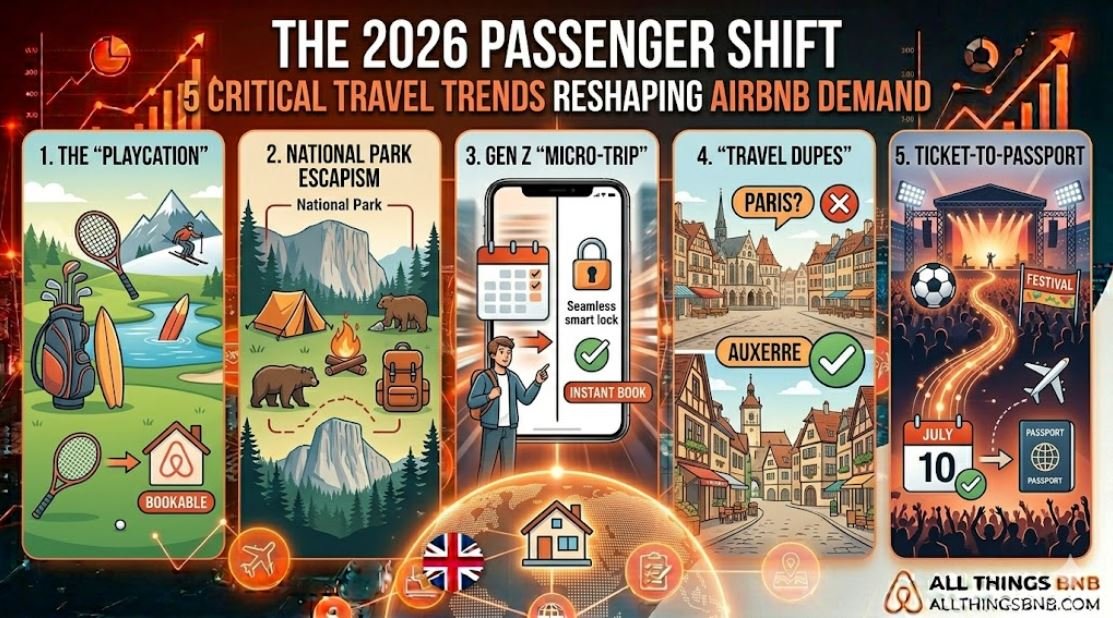
The short-term rental market has officially entered a new phase. The old, predictable rhythms of the peak summer rush and traditional vacation sightseeing have fragmented. Driven by massive generational shifts, screen fatigue, and a craving for hyper-specific experiences, travelers are interacting with booking platforms in an entirely different way.
If your listings are still optimized for the guest profiles of two or three years ago, you are actively leaving money on the table. To help you realign your portfolio strategy, we have broken down the top 5 defining travel trends pulled straight from Airbnb’s latest data—along with the exact playbooks you need to capture this high-intent demand.
1. The Rise of the "Playcation"
Guests are no longer building their vacations around famous geographical landmarks or traditional sightseeing itineraries. Instead, they are selecting destinations solely based on their personal hobbies and favorite recreational pastimes.
-
The Data: Airbnb data shows an unprecedented spike in booking growth for properties located immediately adjacent to premium golf courses, surf breaks, and active boating lakefronts.
-
The Playbook: Stop pitching just your interior walls. Audit your listing titles and primary descriptions to emphasize activity accessibility. If your property is 10 minutes from a highly rated public golf course or a popular kayak launch site, that information needs to be front-and-center in your marketing hook. Provide activity-specific amenities, like secure board racks, high-end golf bag storage, or beach chairs.
2. "Touching Grass" & National Park Escapism
Screen burnout and information overload have triggered a massive collective cultural movement to unplug from digital infrastructure. Travelers are actively looking to step away from the urban noise and spend time outdoors.
-
The Data: Search volume for stays immediately bordering U.S. National Parks has surged by an incredible 35%, outperforming traditional urban hubs and standard coastal resort markets.
-
The Playbook: You don't need to own a remote luxury cabin in the deep wilderness to cash in on this trend. If your property has any outdoor space—whether it’s a rural acreage or a small metropolitan patio—invest heavily in the "Outdoor Anchor" experience. Install an aesthetic fire pit, high-quality outdoor seating, and warm ambiance lighting. Make sure these outdoor setups dominate your top five listing photos.
3. The Gen Z "Micro-Trip" Power Sprint
The traditional block of 7-to-10-day annual holidays is being quietly retired by younger demographics in favor of frequent, hyper-condensed getaways. Gen Z travelers are treating international and domestic cities as 48-hour high-energy culture sprints.
-
The Data: A massive portion of younger travelers are now booking trips within a rapid 48-hour departure window, shifting toward flexible, high-frequency travel over long-term planning.
-
The Playbook: Long minimum-stay restrictions make you completely invisible to this high-yield demographic. Implement a "Weekend Warrior" calendar model that automatically opens up shorter, single-night stays during mid-week gaps or specific weekends. Most importantly, turn on Instant Book and ensure a seamless smart lock integration. A Gen Z traveler on a time-crunched 48-hour trip will not wait around for manual host approval or a physical key exchange.
4. "Travel Dupes" Taking Over Mainstream Destinations
Conscious of heavy crowds and soaring prices in primary tourism markets, travelers are aggressively seeking alternative destinations that offer identical cultural vibes, scenery, and aesthetics at a fraction of the cost.
-
The Data: Driven by viral social media trends, searches for "Destination Dupes"—like swapping heavily congested islands for peaceful, lesser-known coastal towns—have skyrocketed across booking platforms.
-
The Playbook: If your properties are located in secondary, regional, or up-and-coming markets, lean into the comparison. Market your property as a tranquil, affordable, and authentic alternative to the nearest major tourist hub. Highlight local hidden gems, uncrowded natural spaces, and regional boutique experiences that corporate resort towns simply cannot replicate.
5. Ticket-to-Passport: Mainstage Event Tourism
Travelers are increasingly building entire international or cross-country vacation itineraries around a single calendar date—specifically major sports events, massive stadium concert tours, and cultural festivals.
-
The Data: Airbnb reports that over 65% of the most highly searched dates coincide directly with major global events, with massive travel surges already concentrating around key host cities.
-
The Playbook: You cannot afford to run your booking calendar on autopilot. Map out your local region's major event schedule up to 12 months in advance. When a major tournament, festival, or massive stadium tour lands in your area, dynamically adjust your rates, increase your deposit structures, and set strategic minimum-stay guidelines early to optimize your yield.
The Final Verdict
     [ Traditional Strategy ]                    [ 2026 Trend Strategy ]
  ───────────────────────────────            ───────────────────────────────
  • Generic "Nature" Tags                     • Hyper-Specific Activities (Playcations)
  • 3-Night Fixed Minimums                    • Flexible Micro-Trips & Instant Book
  • Reactive Pricing Strategy                 • Proactive Event Calendar Management
The hosts who are thriving in today's hospitality landscape are agile, data-driven, and highly attuned to the shifting psychology of the modern guest. By adjusting your amenities, loosening rigid stay restrictions, and aligning your properties with these five macro trends, you turn changing traveler habits into your portfolio's unfair advantage.
Which of these five shifts stands out as the biggest opportunity for your properties? We can dive deeper into optimizing your descriptions and pricing setup to target that specific group of guests.