
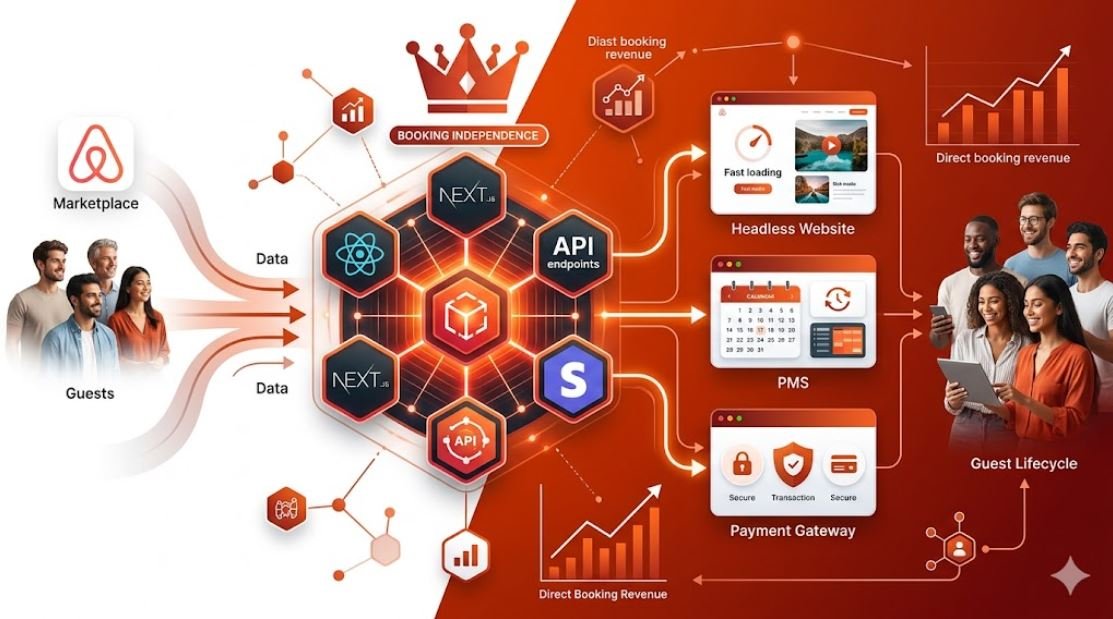
For years, relying on a single major marketplace platform felt like a safe bet. It brought steady traffic, structured the payout logistics, and took care of the basic trust architecture.
But as we hit the midpoint of 2026, the short-term rental ecosystem is experiencing a massive structural fragmentation. Rising platform commission structures, stricter localized compliance rules, and shifting algorithmic changes have made relying on a single channel a high-risk operational strategy.
The industry's focus is rapidly shifting toward channel independence. High-performing property managers are no longer just hosts; they are building independent, robust, digital ecosystems designed to capture direct bookings and build long-term enterprise value.
The Evolution of the Direct Booking Tech Stack
Building a direct-booking channel used to mean putting up a clunky, slow template site that felt untrustworthy to the average traveler. Today, modern headless frameworks and seamless payment APIs have democratized enterprise-grade web experiences.
                [ The Modern Direct-Booking Flywheel ]
                                  │
                                  ▼
                     [ Headless Frontend Website ]
                     • Blazing-fast load times (Next.js/React)
                     • Rich, responsive media layouts
                                  │
                                  ▼
                  [ Property Management System (PMS) ]
                  • Real-time calendar syncing (iCal/API)
                  • Centralized guest communication hub
                                  │
                                  ▼
                     [ Integrated Payment Gateway ]
                     • Secure tokenization (Stripe/Local APIs)
                     • Instant hold deposits & automated payouts
To break away from complete marketplace dependency, professional operators are leaning into highly customized platforms rather than generic visual builders:
-
Headless Web Frameworks: Utilizing advanced stacks like React or Next.js allows operators to build lightning-fast web experiences. A website that loads instantly and moves seamlessly through the checkout funnel drastically reduces cart abandonment rates.
-
Deep PMS API Integration: Modern Property Management Systems (PMS) allow custom websites to pull live availability, dynamic seasonal pricing, and detailed house rules directly onto an independent page without lag or calendar overlapping risks.
-
Localized, Frictionless Payments: Integrating localized payment gateways and robust digital wallets allows guests to bypass platform service fees while ensuring secure, instant payout verification for the operator.
Overcoming the Trust Deficit
The biggest hurdle for any direct-booking platform is trust. When a guest books on a massive marketplace, they are paying for a corporate insurance policy, a known dispute resolution system, and verified user history.
To scale an independent channel, your digital touchpoints must actively engineer trust at every stage of the funnel:
The Trust Framework: Replace corporate site badges with tangible, verifiable trust signals. Use secure SSL encryption protocols, implement strict, transparent data-handling privacy policies, and highlight verified third-party review collection feeds (such as Trustpilot or Google Reviews) directly onto your custom checkout pages.
Driving Traffic: Owning the Guest Lifecycle
A beautiful direct-booking website is useless if no one knows it exists. Winning the independent booking game requires capturing the guest after their first stay or intercepting them early in their discovery phase:
1. The Post-Stay Retargeting Funnel
Your best source of direct bookings is your past guest list. Use automated email marketing flows to offer exclusive loyalty incentives, early-access holiday booking windows, or seasonal discounts to guests who have already proven to be respectful and reliable.
2. Localized Search Engine Optimization (SEO)
While major marketplaces dominate global search queries, they often lose to hyper-localized intent. Optimize your independent site for highly specific local search patterns—such as "premium corporate corporate housing near [Local Business Hub]" or "luxury stay with EV charging near [Local Landmark]"—to catch high-intent travelers looking outside traditional apps.
3. Building Brand Identity Over Commodity Listings
When you rely entirely on an app, your property is a commodity stacked against a hundred identical listings. A dedicated web presence allows you to showcase curated lifestyle content, detailed neighborhood insider guides, and professional video tours that position your brand as a premier local hospitality expert.
Final Verdict
Diversification is the ultimate safeguard against platform volatility. By investing in an independent, lightning-fast digital tech stack and owning your guest relationships, you transform a fragile hospitality business into a resilient, high-value brand.