
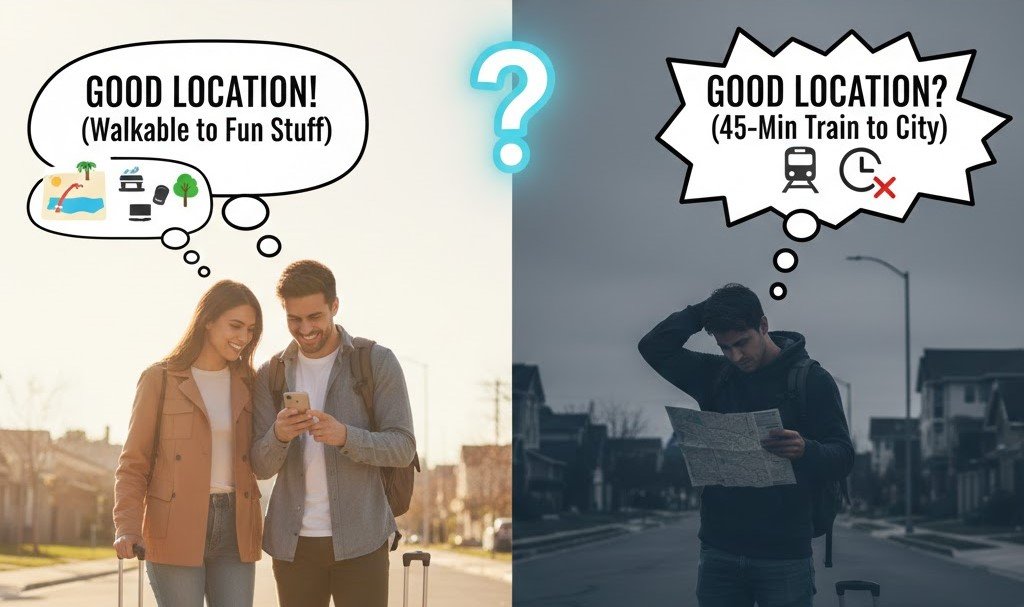
“Great location” is one of the most common phrases in Airbnb reviews. Hosts see it constantly — often without much explanation. But what do guests actually mean when they use this phrase?
Understanding how guests define a “good location” can help Airbnb hosts position their listings better, attract the right guests, and avoid mismatched expectations that lead to four-star reviews.
Here’s a closer look at what guests are really saying.
1. Convenience Matters More Than Distance
Guests don’t always mean “central” when they say a location is good. More often, they mean it was easy to get where they needed to go.
This could include:
-
Quick access to public transport
-
Simple routes to major roads or motorways
-
Short, predictable travel times to key areas
A property slightly outside the city centre can still earn “great location” reviews if transport is reliable and stress-free.
2. Walkability Is a Big Plus
Many guests judge location by what they can do on foot. Nearby cafés, supermarkets, restaurants, parks, and pharmacies add real value to a stay.
When guests say “good location,” they often mean:
-
Shops and food options were close by
-
They didn’t need a car for everyday needs
-
The area felt easy to explore
Highlighting walkable amenities in your listing description can strongly influence guest perception.
3. Safety and Neighbourhood Feel Count
A good location isn’t just about logistics — it’s also about how the area feels.
Guests notice:
-
Clean streets
-
Well-lit areas at night
-
Quiet surroundings
-
A sense of safety when arriving late
Even if a property is centrally located, negative impressions of the neighbourhood can affect how guests rate the location.
4. Proximity to the Guest’s Purpose
Different guests define “good location” differently, depending on why they’re travelling.
Examples include:
-
Business travellers valuing proximity to offices or transport hubs
-
Families wanting parks, attractions, and quiet streets
-
Tourists prioritising landmarks and cultural areas
-
Event-based guests focusing on stadiums, venues, or wedding locations
A location doesn’t need to suit everyone — it needs to suit the right guest.
5. Noise Expectations Play a Role
Interestingly, guests may still call a location “good” even if it’s noisy — as long as the noise matches expectations.
City-centre guests often accept:
-
Traffic sounds
-
Nightlife noise
-
Early morning activity
Problems arise when noise isn’t clearly communicated. Transparency helps guests judge whether the location suits them before booking.
6. Ease of Arrival and Check-In
Guests also factor in how easy it was to arrive at the property. Clear directions, simple access, and smooth check-in contribute to the perception of a good location.
Common positives include:
-
Straightforward navigation
-
Easy parking or drop-off
-
Close proximity to stations or airports
A stressful arrival can negatively impact how guests view the location — even if the area itself is excellent.
How Hosts Can Use This Insight
To make the most of “good location” feedback, hosts should:
-
Describe transport links clearly
-
Highlight nearby amenities and walking distances
-
Set realistic noise expectations
-
Position the listing around the ideal guest type
-
Include neighbourhood context in descriptions
When guests know what to expect, they’re far more likely to see the location as a positive — and say so in their review.
Final Thoughts
When guests say “good location,” they’re rarely talking about a map pin alone. They’re describing convenience, comfort, safety, and suitability for their trip.
By understanding what this phrase really means, Airbnb hosts can better market their properties, attract the right guests, and turn vague praise into consistently higher ratings.
At AllthingsBNB, we help hosts read between the lines of guest feedback — and use it to build stronger, more profitable Airbnb businesses.