
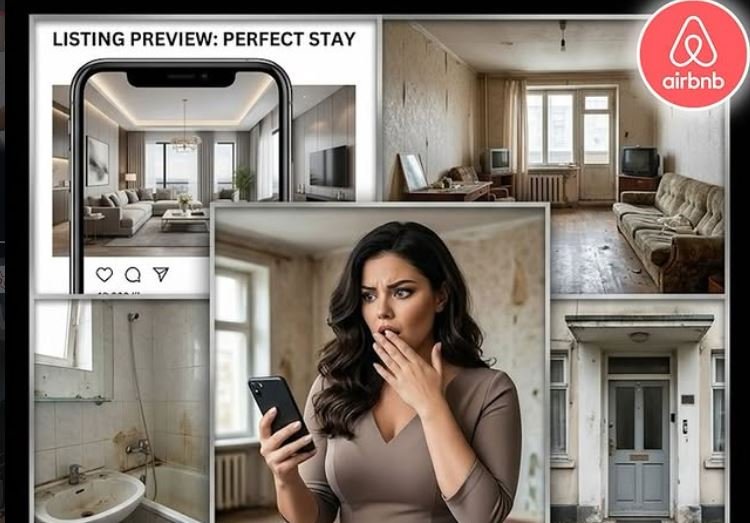
What was supposed to be a dream getaway turned into a major disappointment after a traveler claimed the Airbnb listing photos she relied on were entirely AI-generated, leaving her with an accommodation that looked nothing like what was advertised.
As generative AI tools become more accessible, a troubling new trend is emerging in the short-term rental market: listings powered by synthetic visuals rather than real-world photography.
According to reports:
-
The Digital Hook: The guest booked the Airbnb based on striking, highly attractive listing photos that showcased a spacious, ultra-modern, and professionally styled interior. 📱
-
The Reality Check: Upon arrival, she alleged the physical property was dramatically different from the images, featuring layout inconsistencies, missing furnishings, and an entirely different overall condition that pointed straight to AI generation. 🤖
-
The Discrepancies: The stark contrast reportedly spanned across room dimensions, structural layouts, lighting, and décor, leaving the guest feeling completely misled. 😟
-
The Online Backlash: The incident quickly sparked wider online debates regarding the ethics of synthetic media in real estate marketing and how difficult it is for everyday travelers to spot fake assets. 📸
-
Platform Policies: While major platforms officially require hosts to provide truthful representations of their properties and prohibit deceptive media, enforcement inconsistencies continue to frustrate consumers. 🏡
Why Authentic Visuals Matter More Than Ever
The rise of synthetic property marketing highlights a growing vulnerability in digital booking ecosystems. When hosts substitute reality with computer-generated perfection, it creates a ripple effect across the entire industry:
-
🤖 The Illusion of Perfection: Generative AI allows bad actors to fabricate luxurious spaces instantly, making low-quality or unfinished properties look like high-end retreats.
-
📷 The Death of Trust: When listing photos cannot be trusted, travelers become hyper-skeptical, impacting honest hosts who rely on genuine photography.
-
⚖️ Erosion of Transparent Standards: Accurate advertising is the baseline of hospitality; misrepresenting a physical space breaks the fundamental contract between host and guest.
-
⭐ Preventing Avoidable Disputes: Clear, realistic photos protect both parties, drastically reducing check-in shock, angry reviews, and emergency refund claims.
The Takeaway
Artificial intelligence can be a powerful tool for marketing and digital staging, but it should never cross the line into outright misrepresentation. Guests expect listing photos to accurately reflect what they will experience the moment they walk through the door, making radical transparency essential for maintaining long-term trust in short-term rentals.
Join the Discussion
The big question: Should short-term rental platforms implement mandatory image verification and automated detection tools to ensure AI-generated or heavily doctored photos never mislead guests? 🤔 Let us know your thoughts in the comments below!