
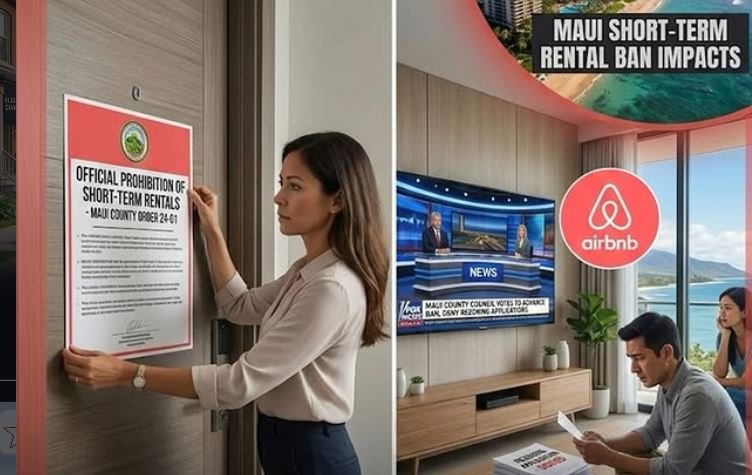
The rules of hosting just tightened in Hawaii — and the ripple effects are being felt across the global short-term rental industry.
In a major development, the Maui Planning Commission rejected proposed H-3 and H-4 rezoning categories. These categories could have allowed nearly 7,000 apartment-zoned short-term rentals to continue operating.
Instead, the decision reinforces a regulatory path that prioritises long-term housing supply over short-term rental flexibility.
For hosts in Maui — and for operators worldwide watching regulatory trends — this marks a decisive moment.
🚨 Why This Matters
The rezoning proposal was widely viewed as a potential workaround to Bill 9, which aims to phase out thousands of transient vacation rentals, including those listed under the long-standing Minatoya List.
With the proposal denied:
• Approximately 7,000 STR units remain at risk of phase-out
• Apartment-zoned rentals face stricter enforcement pressure
• Housing availability is being prioritised over tourism flexibility
• The final decision now moves to the Maui County Council
Supporters of the rezoning warned of economic fallout, citing tourism dependency and local job impacts.
Opponents argued that Maui faces a housing crisis — not a rental shortage — and that residential inventory must return to local families.
🏠 The Bigger Housing Debate
Maui’s decision reflects a broader global tension:
Should housing be treated primarily as residential infrastructure — or as tourism inventory?
Like many high-demand destinations, Maui has experienced:
-
Rising property values
-
Reduced long-term rental availability
-
Increased cost of living
-
Community pushback against short-term rentals
In this context, STR regulation becomes a political and social issue — not just an economic one.
📉 What This Means for Short-Term Rental Operators
1. Regulatory Risk Is Real
Maui demonstrates how quickly operating frameworks can shift. Listings once considered legal can suddenly face phase-out timelines.
2. “Grandfathered” Status Is Not Permanent
The Minatoya List previously allowed certain units to operate despite zoning conflicts. Bill 9 challenges that legacy protection.
3. Enforcement Momentum Is Growing
As public pressure builds around housing affordability, enforcement mechanisms are becoming more structured and aggressive.
🌍 Global Ripple Effects
Although this decision is specific to Hawaii, markets worldwide are watching closely.
Cities in Europe, North America, and parts of Asia are navigating similar debates:
-
Housing affordability vs tourism revenue
-
Community impact vs property rights
-
Local residents vs investor-owned STR portfolios
Maui’s stance signals a firm policy direction: long-term housing supply takes priority.
For professional hosts elsewhere, this reinforces a critical lesson — regulatory stability cannot be assumed.
💼 Strategic Lessons for Hosts Everywhere
Even if you operate outside Hawaii, Maui’s situation highlights important safeguards:
Diversify Markets
Avoid heavy concentration in a single jurisdiction with rising regulatory pressure.
Monitor Local Planning Discussions
Policy changes often surface in planning committees long before enforcement begins.
Maintain Compliance Documentation
Being fully compliant strengthens your position if regulations tighten.
Consider Hybrid Rental Models
Mid-term or long-term flexibility can reduce exposure if STR rules change.
⭐ The Bottom Line
Maui is signalling a decisive shift toward long-term housing protection over short-term rental expansion.
For STR operators in the region, uncertainty remains as the final decision progresses through the County Council. But the regulatory direction is clear.
For the broader hosting industry, this moment underscores a growing global trend: short-term rental growth is increasingly shaped not by platform demand — but by public policy.
Hosts who treat regulation as a core business risk, rather than a background issue, will be better positioned to adapt in 2026 and beyond.