The short-term rental landscape in the UK is moving faster than ever this year. From major legislative shifts to new traveler behaviors, hosting in 2026 requires a more strategic approach than the "set it and forget it" models of the past.
At All Things BNB, we’re tracking the data to keep you ahead of the curve. Here are the top five trends currently defining Airbnb in the UK.
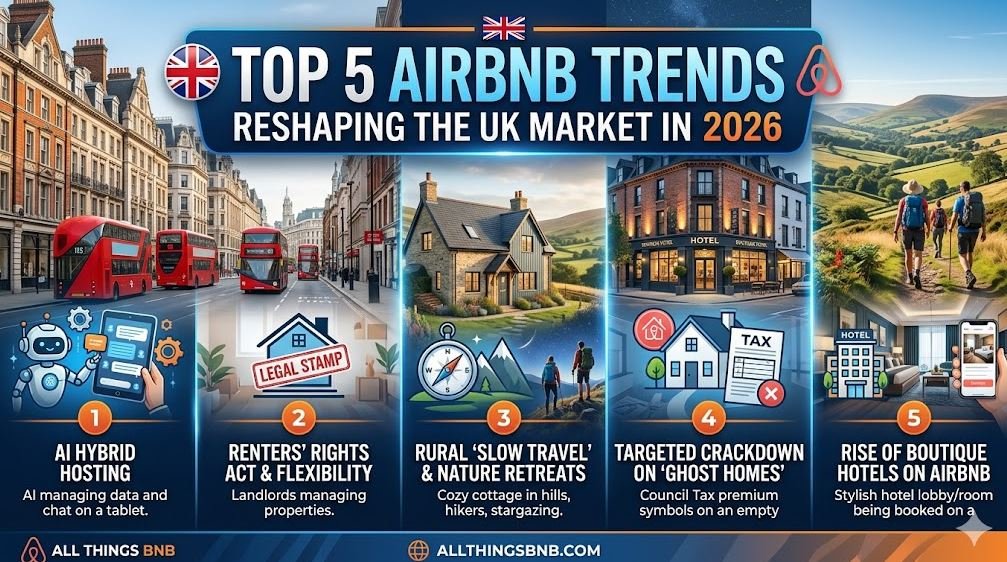
1. The Integration of AI "Hybrid Hosting"
As Airbnb CEO Brian Chesky recently noted, the most successful hosts in 2026 are those evolving alongside AI. We are seeing a massive shift toward "Hybrid Hosting," where AI handles the technical "heavy lifting"—such as dynamic pricing, automated guest screening, and instant multi-language communication—allowing hosts to focus entirely on the human side of hospitality.
-
The Trend: Using AI agents to "dream" through past guest feedback to identify recurring issues before they become bad reviews.
-
The Benefit: Higher efficiency and fewer "human errors" in booking management.
2. The "Renters’ Rights" Ripple Effect
The implementation of the Renters’ Rights Act in May 2026 has fundamentally changed the relationship between long-term and short-term letting. With "no-fault" evictions now a thing of the past for long-term tenancies, many landlords are looking toward the Airbnb model for greater flexibility.
-
The Trend: A surge of professional landlords moving inventory from the long-term sector into short-term lets to maintain control over their assets.
-
The Impact: Increased competition in urban hubs like Manchester, Birmingham, and London.
3. Rural "Slow Travel" & Nature Retreats
Gen Z has officially traded the nightclub for the nature trail. Recent data shows that nearly 94% of younger travelers are prioritizing rural getaways and "slow travel" experiences over traditional city breaks.
-
The Trend: "Safari-style" UK stays and luxury farm retreats are seeing record-breaking occupancy rates.
-
Pro Tip: If your property is rural, highlight "unplugged" amenities like stargazing kits, outdoor fire pits, or proximity to local produce markets.
4. The Targeted Crackdown on "Ghost Homes"
The UK government is tightening the net on the "70-night loophole." In 2026, local councils have more power than ever to levy 100% Council Tax premiums on second homes that aren't being actively and professionally managed.
-
The Trend: Hosts are becoming more aggressive with their marketing and seasonal pricing to ensure they hit the "actually let" thresholds required to maintain business rate status.
-
The Bottom Line: Passive second-home ownership is becoming too expensive; active hosting is the only way to remain profitable.
5. The Rise of Independent "Boutique" Hotels on the App
Airbnb is no longer just for spare rooms and villas. The platform is now a major hub for independent and boutique hotels, which are being integrated directly into search results.
-
The Trend: Travelers are now comparing a local cottage directly against a boutique hotel room in the same search.
-
The Strategy: To compete, individual hosts must lean into what hotels can't provide—full kitchens, personalized neighborhood guides, and a genuine "home" atmosphere.
Stay Ahead with All Things BNB
The UK market is professionalizing at a rapid pace. Whether you are navigating new tax laws or trying to capture the Gen Z rural travel boom, staying informed is your greatest competitive advantage.
Visit allthingsbnb.com for more deep dives into the 2026 rental market.
Which of these trends is impacting your property most this year?