
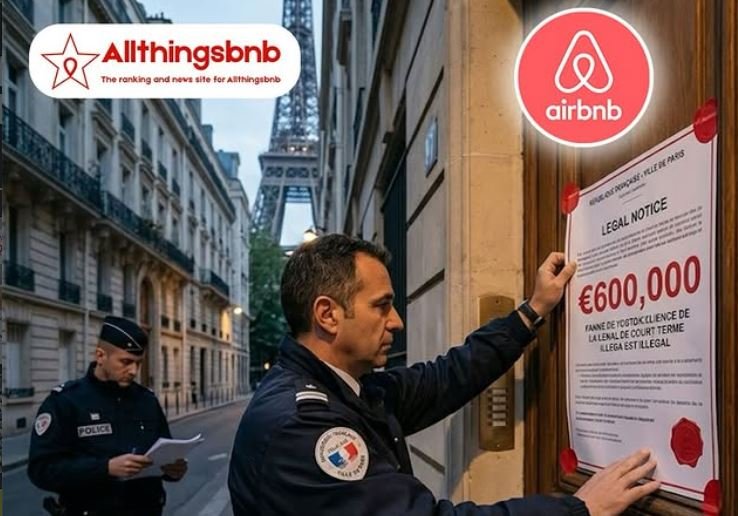
A major ruling in Paris is sending a clear message to short-term rental hosts: play by the rules—or pay the price. In April 2026, the Paris Tribunal handed down a staggering fine that serves as a warning shot to professional landlords and real estate companies operating outside the law.
At All Things BNB, we prioritize staying compliant in a shifting regulatory landscape. Here is the breakdown of the case that has put global hosts on high alert.
What Happened: The 9th Arrondissement Case
A property owned through a Société Civile Immobilière (SCI)—a French real estate company—was hit with a total penalty of €585,000 after illegally converting a residential building into a tourist hub.
The Details:
-
The Scale: A building in the 9th arrondissement was transformed into 11 separate Airbnb units.
-
The Violation: The owners failed to obtain the mandatory autorisation de changement d'usage (authorization for change of use).
-
The Registration Failure: The units were not officially registered as tourist rentals with the city.
-
The Social Impact: Perhaps most critically, the building had previously served as a résidence sociale—housing specifically designated for vulnerable residents.
The Ruling: A New Level of Enforcement
The Paris Tribunal found the owners guilty of illegal conversion, imposing a principal fine of €445,000 plus additional penalties to reach the record-breaking total. This judgment was made possible by the recently implemented Loi Le Meur (formally the Loi Echaniz-Le Meur), which significantly increased the financial stakes for non-compliance.
Why This Fine Is Different:
-
Doubled Penalties: Before the new law, the maximum fine for a change-of-use violation was capped at €50,000 per unit. Under current rules, that cap has doubled to €100,000 per unit.
-
Targeting Corporate Entities: The city is explicitly moving away from individual "mom-and-pop" hosts and focusing its fire on professional SCIs and investment groups.
-
The Enforcement Brigade: Paris recently approved a new 150-person "housing protection brigade" specifically tasked with hunting down illegal tourist lets.
😳 Why It Matters for the Industry
Paris officials estimate there are still roughly 25,000 illegal rentals across the city. This record fine is part of a broader strategy to rebalance the housing market.
-
Addressing Housing Shortages: Short-term lets are frequently blamed for worsening the housing crisis in central Paris, making it impossible for local workers to find affordable long-term homes.
-
A Warning to Professional Landlords: The city has issued nearly €1 million in fines in the first quarter of 2026 alone, indicating a sharp upward trend in aggressive enforcement.
-
Revenue Confiscation: In addition to flat fines, judges now have more leeway to confiscate revenue earned through illegal rentals.
🛡️ How to Protect Your Hosting Business
Regardless of where you host—whether in Paris, London, or rural England—the global trend is moving toward stricter oversight.
-
Verify Your Permits: Never assume a residential property can be used for short-term lets. Always check local "change of use" bylaws.
-
Register Every Listing: Ensure your registration number is clearly displayed on all platforms (Airbnb, Booking.com, Vrbo).
-
Consult Local Experts: Regulations in 2026 are complex. A small investment in legal or professional consulting can save you from a catastrophic fine later.
The Bottom Line
Paris isn't just tweaking the rules; it is declaring war on "predatory" hosting models. This isn't about stopping tourism—it’s about ensuring that the growth of the short-term rental market doesn't come at the expense of the people who call the city home.
Your Take: Is a €600k fine a fair deterrent for illegal professional rentals, or is it too extreme for the industry?
Stay Compliant, Stay Profitable
The world of BNB hosting is changing. To stay informed on the latest legal rulings and professional hosting standards, keep following allthingsbnb.com.