
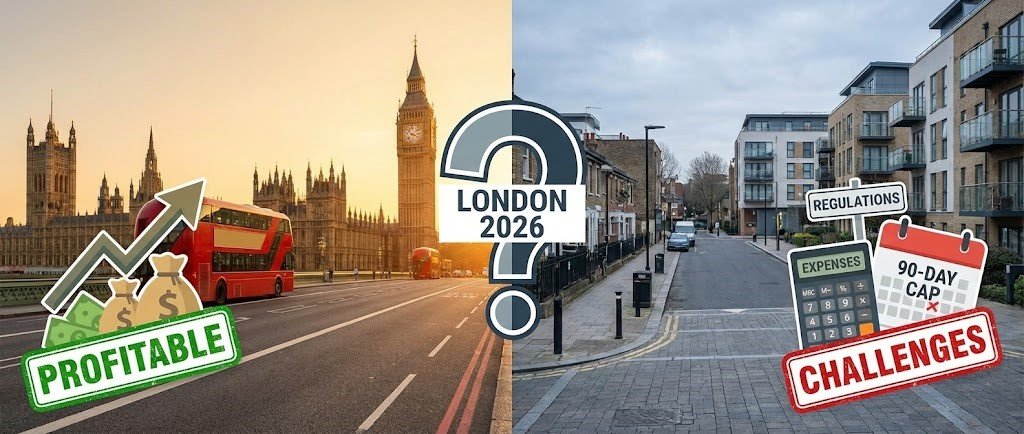
London has long been one of the world’s most iconic and lucrative short-term rental markets. With millions of international and domestic visitors annually, the demand for short stays in the UK capital remains strong. But with rising costs, regulatory pressures, and shifting guest patterns, many hosts are asking the same question in 2026:
Is Airbnb still profitable in London today?
Let’s break down the current data, trends, and what hosts need to know about operating profitably in one of the busiest short-term rental markets in the world.
Strong Demand and Healthy Revenue Figures
Airbnb data shows that London continues to generate solid revenue for hosts:
-
Listings in London achieved average daily rates (ADR) of around £136 to £222 in recent reporting, depending on the area and property type.
-
Median annual revenues per listing have been reported around £38,000 to £50,000, reflecting robust booking activity.
-
Occupancy rates in London remain strong, with figures frequently reported between 60% and 74%.
These figures indicate that London’s short-term rental market still attracts guests year-round and can be financially rewarding — especially compared to many other UK destinations.
Understanding Gross vs Net Profit
Profitability isn’t just about gross revenue. Hosts must consider:
-
Cleaning and turnover costs
-
Utilities and council tax
-
Platform fees (Airbnb service fees)
-
Maintenance and management costs
-
Insurance and regulatory compliance
Analyses suggest that realistic net profits for many London Airbnb hosts in 2026 fall between £500 and £750 per month before mortgage and tax — with annual net profits roughly between £6,000 and £9,000 for many properties.
While that may not seem enormous compared to headline revenue figures, it still represents healthy returns for many hosts — especially if operational costs are tightly controlled and pricing optimised.
Location and Property Type Matter
London’s vast size means different neighbourhoods perform differently:
-
Central areas like Westminster, Kensington & Chelsea, and City of London command premium rates and higher annual revenue estimates.
-
Outer boroughs and neighbourhoods with lower ADRs still deliver solid occupancy and more affordable property acquisition costs.
-
Flats and smaller units (studios and one-beds) make up a large share of bookings and often deliver the highest occupancy relative to cost.
Choosing the right location and property type remains one of the biggest determinants of profitability.
Regulatory Landscape in 2026
London hosts still operate under the 90-night annual cap for entire homes without planning permission, meaning many properties are limited in the number of nights they can be rented out.
There’s no mandatory national licensing scheme yet in England, but councils are increasingly focused on enforcement, with fines and restrictions possible if rules aren’t followed.
These regulations make it crucial for hosts to:
-
Track nights accurately
-
Plan pricing around the cap
-
Ensure all local rules are followed
Regulatory compliance costs can eat into profits if not managed carefully.
Market Dynamics: Still Competitive, Still Demand
Despite broader UK housing and rental pressures — including record rises in long-term rents in London — short-term rental remains a distinct segment with strong demand.
London’s frequent events, tourism appeal, and business travel continue to support Airbnb bookings even as global travel trends shift and costs rise.
Who Is London Airbnb Still Best For?
Airbnb profitability in London tends to favour:
-
Hosts with multiple listings or efficient turnover systems
-
Properties in high-demand areas close to transport and attractions
-
Hosts who optimise pricing dynamically
-
Hosts who control costs through professional cleaning and management
For hosts who treat their rental as a business rather than a hobby, London still delivers strong returns.
Final Verdict: Yes — Airbnb Can Still Be Profitable in London in 2026
London is far from a dead market. While profit margins may be narrower compared to headline gross revenue figures, the data shows:
-
Strong occupancy and ADRs
-
Annual median revenues in the tens of thousands
-
Opportunities for net profitability with smart management
However, profitability requires:
-
Careful cost control
-
Smart pricing strategies
-
Compliance with evolving local rules
-
Understanding the economics of each neighbourhood
Hosts who approach London strategically — viewing it as a long-term business rather than a passive income source — are the ones who are still making money through Airbnb in 2026.