
Just when you thought you had your 2026 financial spreadsheet completely balanced, the goalposts have shifted again.
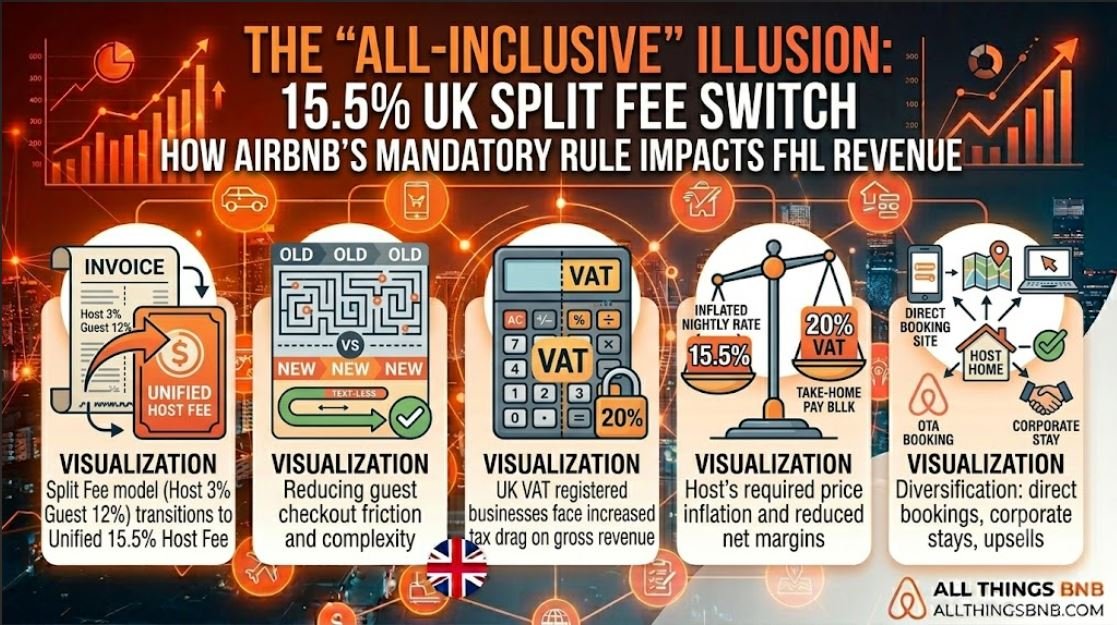
Starting this month, Airbnb is rolling out a sweeping structural adjustment to its fee system across the United Kingdom. In a mandatory push to "simplify the booking process," the platform is eliminating the traditional split-fee structure for thousands of UK operators. Instead of the old model—where the host paid a modest 3% and the guest paid a variable 12% service fee at checkout—Airbnb is combining them into a single, comprehensive 15.5% Host-Only Fee.
At All Things BNB, we don't just echo corporate announcements; we dissect the fine print. While Airbnb presents this as a consumer-friendly move toward pricing transparency, the reality for UK furnished holiday let (FHL) owners is a massive operational tax trap.
Here is why this change is hitting UK portfolios so hard and the exact steps you need to take to protect your margins.
1. The Psychology Behind the 15.5% Switch
The math looks simple on paper: the total fee charged by the platform remains virtually identical. The guest used to see a lower nightly price but got slapped with a hefty "Service Fee" right before clicking confirm. Now, that guest sees the absolute gross cost upfront, and the host absorbs the entire commission logic on the backend.
Airbnb’s internal data shows that modern travelers have extreme checkout friction when unexpected fees appear at the end of a funnel. By forcing a single unified rate, the platform is aiming to drive higher conversion rates and compete directly with the "clean pricing" models used by boutique hotels.
2. The UK VAT Nightmare: The Invisible Cost Increase
While the total commission percentage hasn't technically changed, the tax calculation landscape for UK VAT-registered businesses has completely fractured.
Under the old 3% split-fee model, a host was only liable to account for VAT on their net income. However, because the guest fee has now been legally shifted onto the host's invoice as a flat 15.5% operational expense, the financial equations change dramatically:
-
Gross Revenue Inflation: To keep your take-home pay the same, you have to increase your base nightly rate by roughly 12% to cover the new host fee.
-
The VAT Trap: In the UK, if your short-term rental turnover crosses the threshold or you are voluntarily VAT-registered, you must pay 20% VAT on the gross amount the guest pays. * The Double Hit: Because you are now inflating your gross nightly price to absorb Airbnb's 15.5% service fee, you are effectively paying an additional 20% VAT on top of the fee you just absorbed. You cannot reclaim the VAT on the extra guest-portion of the fee, meaning a massive chunk of your standard summer profit margin is simply vaporizing into HMRC's vaults.
3. How to Recalibrate Your Portfolio Immediately
You cannot opt out of this rolling update, but you can absolutely change how your business responds to it. If you operate a short-term rental in the UK market, implement this defensive playbook today:
Audit Your Pricing Architecture
Do not just blindly let your dynamic pricing software pull your old base rates. Sit down with your revenue management tool and manually calculate your exact net margins under the 15.5% rule. If you are VAT-registered, your nightly prices must be adjusted upward slightly higher than a basic 12% math equation to account for the secondary VAT drag.
Shift Your Marketing Focus to Direct Bookings
If there was ever a definitive signal that you need a diversified digital footprint, this is it. Relying 100% on a single OTA leaves you completely vulnerable to structural policy shifts. Use your Airbnb listing as a top-of-funnel discovery tool, but ensure your physical property features elegant branding, a seamless digital welcome book, and a clear path for corporate travelers, event-goers, and families to book directly through your own website next time—saving both parties the 15.5% platform premium.
Lean Into High-Value Upsells
If your core nightly margins are taking a micro-hit, reclaim that revenue by utilizing the other facets of Airbnb's new Super-App framework. Capitalize on the app's new partner integrations—like pre-stocking the fridge via grocery delivery setups, coordinating airport transfers, or offering localized, high-margin landmark and food experiences. Delivering a premium, end-to-end hospitality service allows you to command a premium rate that easily absorbs structural fee changes.
📌 The Bottom Line
The professionalization of the UK short-term rental sector means the era of casual hosting is officially in the rearview mirror. Airbnb's 15.5% simplified fee structure is designed to make the platform look like an all-inclusive hotel search engine, but it leaves hosts holding the tax bag. By running a highly structured corporate audit on your pricing, tracking your gross vs. net allocations, and building out a direct booking pipeline, you can comfortably insulate your business from platform margin erosion.
Defend Your Revenue Margins
Don't let policy shifts dictate your business survival. From local UK compliance checklists to advanced revenue management frameworks, access the elite resources you need to stay profitable. Visit allthingsbnb.com.
Has your UK listing been transitioned to the new 15.5% host fee yet? How are you adjusting your nightly rates to deal with the VAT implications? Let's talk strategy in the comments below!