
For a long time, the relationship between short-term rental hosts and travelers felt like a win-win partnership. But as we move through 2026, that relationship is facing severe strain. A heated online debate has erupted between tightly managed operational expectations and deeply frustrated travelers.
The friction isn't just about platform fees anymore; it is centered on what is actually happening behind closed doors. From viral social media callouts to strict checkouts, the short-term rental space is experiencing a dramatic shift in how people view value, expectations, and trust.
Here are the top three controversial factors driving the friction between hosts and guests right now.
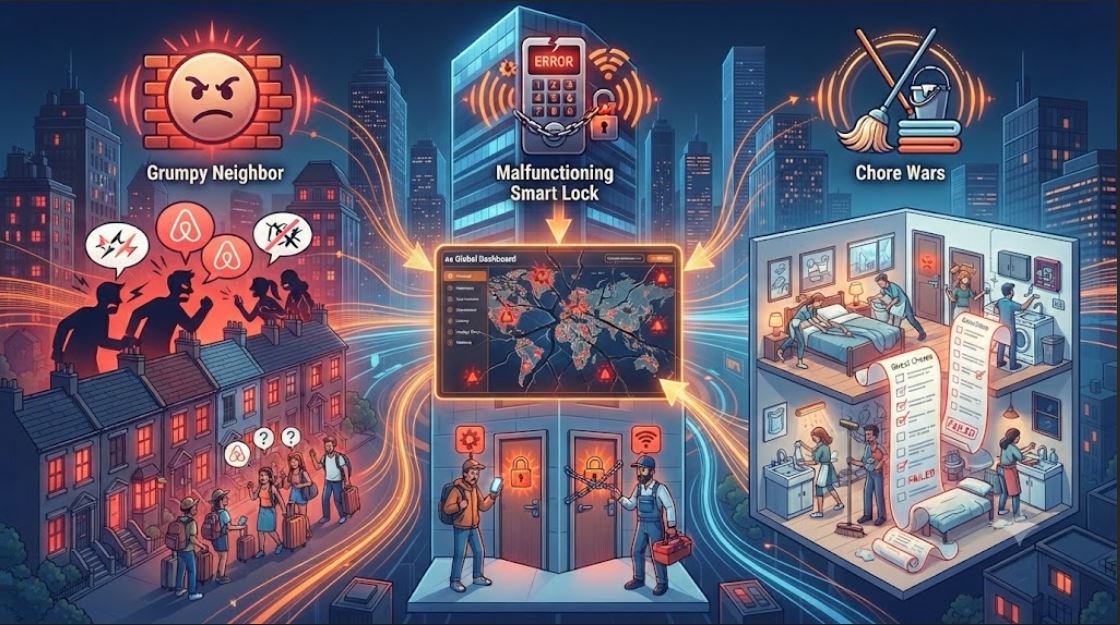
1. The Rise of the Host "Chore Wars" & Hidden Fees
The single biggest point of social media frustration in 2026 centers on extensive guest checkout instructions. Travelers are increasingly vocal about arriving at properties only to find themselves navigating a dense list of domestic demands.
-
The Friction: Guests are frequently noting the contradiction of paying premium nightly rates and substantial cleaning fees, yet being asked to strip beds, run laundry cycles, mow lawns, or take out all trash prior to departure.
-
The Backlash: This operational imbalance has driven a noticeable segment of travelers back to boutique hotels and licensed aparthotels, where checkout simply means closing the door behind you.
  [ The Traveler Dilemma ] ──► Pays Premium Rate + Cleaning Fee
                                             │
                                             ▼
                               [ Demanding Checkout List ]
                               • Strip all bedding & linens
                               • Start the dishwasher & laundry
                               • Take trash to outside bins
2. The "Grumpy Neighbor" Trap and Local Blackouts
Urban bureaucracy and neighborhood resistance have combined to create an incredibly complex environment for short-term travel. Multiple major international hubs have moved from soft restrictions to absolute crackdowns.
-
The Reality: From New York City's strict host-present requirements to Barcelona's efforts to phase out central licenses entirely, staying in an independent apartment in a historic city center has become a logistical challenge. In cities like Istanbul or Bangkok, local building security and neighbors are often highly incentivized to flag and report short-term travelers.
-
The " Cousin" Instruction: This has forced some hosts operating on borrowed time to send awkward, surreptitious messages asking guests to "be discreet," tell building staff they are just "visiting friends," or avoid making eye contact in elevators. For travelers, paying thousands of dollars to act like an undercover intruder is quickly losing its appeal.
3. Smart Locks, Locked Thermostats, and App Overload
As professional operators rely more heavily on remote asset management to cut costs and manage turnover pipelines, properties are becoming increasingly automated. However, this hyper-automation is introducing unique pain points.
-
The Reality: Guests are frequently documenting instances of hosts locking physical thermostats inside plastic boxes, remotely setting strict limits on air conditioning via smart home apps, or using interior cameras to track exact occupancy limits.
-
The Response Delay: While a smart lock provides automated access, any glitch in the digital provisioning system can leave a time-crunched traveler stranded outside. If the management team's response delayed, minor technical issues can quickly escalate into a negative review that impacts algorithmic placement.
The Bottom Line
The short-term rental landscape is no longer a casual hobby; it has evolved into a disciplined, professional service industry. The operators who are succeeding this year are those who recognize that hospitality cannot be entirely replaced by digital automation or offset onto the guest.
To protect your booking corridors and maintain a strong reputation, it is vital to balance operational efficiency with a positive, friction-free guest experience.
Are you seeing guests in your local market push back against complex checkout guidelines, or have you already transitioned to a completely hands-off checkout process?