
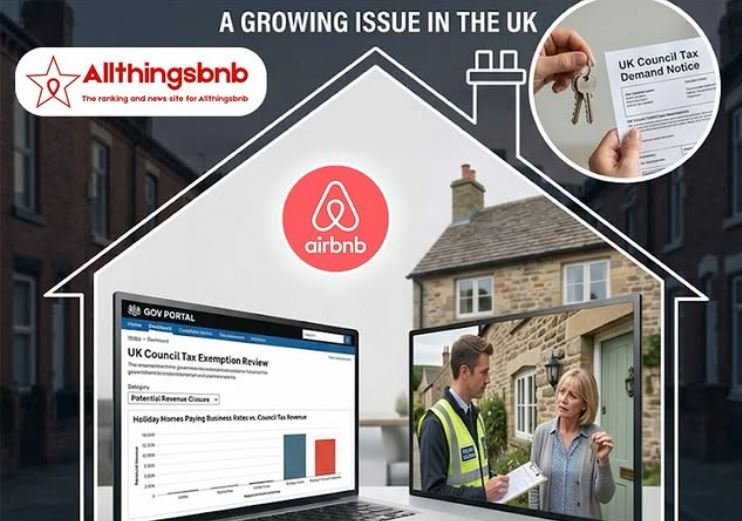
The financial landscape for second-home owners and holiday let hosts has reached a major turning point. For years, a specific tax arrangement allowed thousands of owners to significantly reduce their overheads, but as of 2026, the UK government has moved to close these gaps for good.
At All Things BNB, we keep a close eye on these shifts to help you navigate the transition from a casual host to a resilient, professional business.
What Is the "Loophole" Exactly?
Traditionally, second-home owners could avoid paying any Council Tax by registering their property as a business. To do this, the property only needed to be available for let for 140 days and actually let for at least 70 days per year.
Once registered for Business Rates, many owners qualified for Small Business Rate Relief, which often reduced their tax bill to zero. In many popular holiday destinations, this meant local residents were effectively subsidizing the infrastructure used by holidaymakers, while the property owners paid nothing into the local pot.
The 2026 Crackdown: What Has Changed?
The government is no longer taking a "light-touch" approach. Several new measures have converged to overhaul how holiday homes are taxed:
1. Mandatory Council Tax Premiums
Over 70% of local authorities in England have now implemented a 100% Council Tax premium on second homes. This means that if your property is not your primary residence and does not meet strict business criteria, you are likely paying double the standard Council Tax.
2. Tightened Business Rate Eligibility
The threshold for "actually let" days is under intense scrutiny. It is no longer enough to simply list a property on a platform; owners must provide robust evidence of commercial activity. Ministers are reviewing further increases to these thresholds to ensure that only genuine, full-time holiday businesses benefit from rate relief.
3. New Business Rate Multipliers
From April 2026, England has introduced a new multiplier system for the Retail, Hospitality, and Leisure (RHL) sectors. While this aims to support high-street businesses, it also creates a clearer distinction between professional holiday accommodation and "ghost homes" that remain empty for most of the year.
Why the Government Is Stepping In
This isn't just about collecting more tax; it’s about rebalancing local housing markets.
-
Housing Affordability: In tourist hotspots like Cornwall, the Lake District, and coastal Wales, the explosion of short-term rentals has pushed local workers out of the market.
-
Community Fairness: Councils argue that second-home owners should contribute fairly to the local services (like waste collection and road maintenance) that their guests utilize.
-
Economic Rebalancing: While holiday lets drive tourism, an oversaturation of empty homes during the off-season can lead to "zombie villages" where local shops and schools struggle to survive.
What This Means for Your Strategy
The era of light-touch regulation is fading, but this doesn't mean holiday letting is no longer viable. It does, however, mean you must adapt:
-
Professionalize Your Business: If you want to qualify for business rates, you must prove you are running a serious commercial enterprise with consistent bookings.
-
Account for Higher Overheads: Budget for the possibility of doubled council tax if your property falls short of letting thresholds.
-
Focus on Value: As costs rise, the "set it and forget it" model fails. To maintain margins, you must focus on the guest experience to justify premium pricing.
The Key Question
Will closing these loopholes fix housing pressures, or will the economic ripple effects hurt the very tourism economies these towns rely on?
Your Take: Should the government prioritize local housing affordability over the profits of holiday rental owners?
Stay Ahead of the Curve
As property shifts from a passive asset to a highly regulated business, staying informed is your best defense. For more updates on tax changes and hosting regulations, visit allthingsbnb.com.