
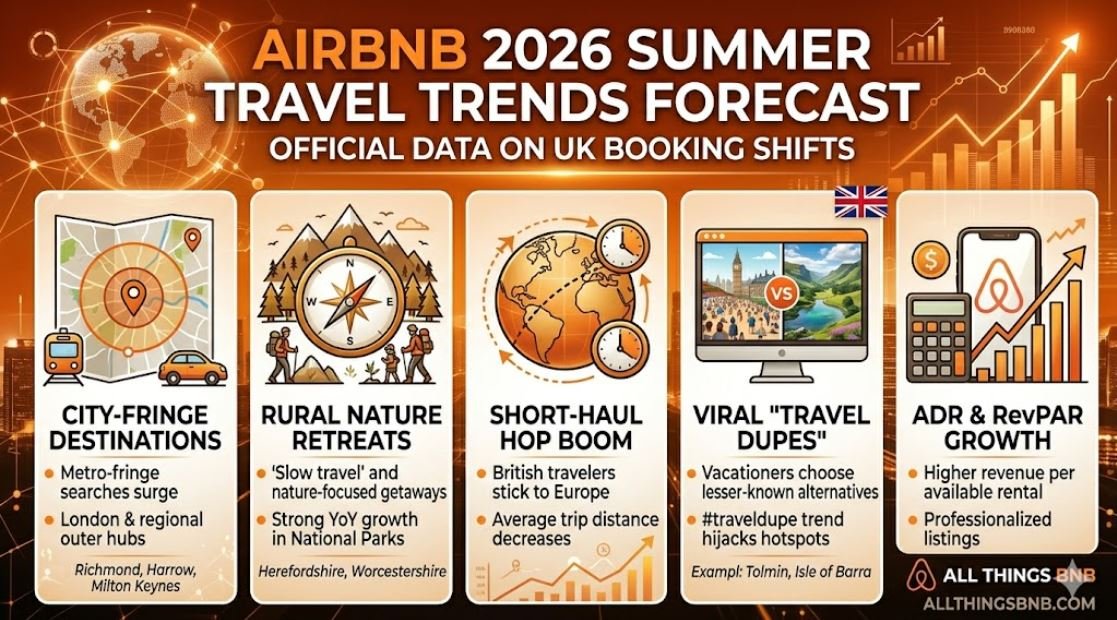
The numbers are officially in. Airbnb just dropped its highly anticipated Summer 2026 Travel Trend Forecast, and the data reveals some fascinating, unexpected shifts in exactly how and where British tourists are spending their holiday money this year.
The narrative surrounding the short-term rental market has matured past the simple "post-pandemic staycation boom". Today, it’s a story of hyper-targeted location hunting, budget-conscious routing, and a massive preference for slower, crowd-free experiences.
At All Things BNB, we’ve parsed the fresh data dumps to give you the exact breakdown of where the traffic is moving this season. If you want to keep your occupancy rates at record highs, here is the news you need to adapt to right now.
1. Domestic Travel: The Rise of the "City-Fringe" Summer
While city centers like central London or Manchester remain strong cultural draws, travelers are explicitly pushing back against peak hotel rates and inner-city congestion. Instead, they are flooding the outskirts.
Airbnb's latest data showcases an explosion in "metro-fringe" destination searches. Guests are booking spaces just far enough outside major hubs to secure affordability and peace, yet close enough to commute in on a transit line for summer sports, festivals, and concerts.
Top Trending UK Metro-Fringe Destinations (YoY Search Growth):
-
Richmond upon Thames, London: +140%
-
Milton Keynes: +96%
-
Stirling, Scotland: +79%
-
Harrow: +78%
-
Stretford (Greater Manchester): +77%
💡 The Host Takeaway: If your property sits in a quiet suburb on a direct train or tube line, your location is a massive selling point this summer. Update your listing title to explicitly mention how quickly a guest can travel from your door into the city center.
2. The Countryside Draw: National Parks Over Nightclubs
Domestic staycations are up overall by 11% year-on-year, but that traffic isn't distributed evenly. British travelers are strongly favoring easy, shorter, and more flexible rural breaks.
Searches are heavily concentrated in and around British National Parks, signaling a major appetite for "slow travel" and nature-focused getaways.
Top Trending UK Rural Areas:
-
Herefordshire: +76%
-
Staffordshire: +50%
-
Worcestershire: +48%
-
Forest of Dean District: +34%
-
Shropshire: +32%
💡 The Host Takeaway: Rural hosts should immediately double down on outdoor amenities. Highlight local hiking routes, proximity to quiet countryside pubs, or provisions like bicycle storage and outdoor picnic kits to capture this crowd.
3. The "Short-Haul Shift" for European Getaways
For Brits who are choosing to dust off their passports and head abroad this summer, the travel distance has shrunk dramatically. All ten of Airbnb's top trending international destinations for UK travelers sit squarely inside Europe.
In fact, the average booked international trip for a UK guest is just 317 miles from home—which is remarkably lower than the broader European average travel distance of 419 miles. Brits are choosing fast, efficient, short-haul hops over grueling long-haul international flights.
4. Viral "Travel Dupes" Are Hijacking Traditional Hotspots
Fueled heavily by the viral #traveldupe trend on social media (which has now captured millions of views), British vacationers are actively ditching overcrowded, hyper-expensive global landmarks for lesser-known, budget-friendly alternatives that offer a similar vibe.
Airbnb’s official 2026 Dupe-It List highlights these emerging shifts:
-
The Beach Swap: Travelers are bypassing Santorini in favor of the historic coastal town of Altea, Spain.
-
The Nature Swap: Instead of paying for flights to the US Grand Canyon, adventure seekers are heading closer to home to explore the turquoise rivers and deep gorges of Tolmin, Slovenia.
-
The Island Swap: Closer to home, travelers are swapping crowded Scottish islands for the Outer Hebrides’ Isle of Barra—affectionately dubbed "Barrabados" by locals for its pristine white sand and clear turquoise waters.
5. The Summary: Extracting More Value From Fewer Bookings
Operationally, the broader data landscape for 2026 paints a fascinating picture for property managers: Supply growth has slowed to about 5% year-on-year, largely due to tighter compliance regulations squeezing out casual, part-time hosts.
Because the market is professionalizing, occupancy has stabilized, but Average Daily Rates (ADR) and RevPAR (Revenue Per Available Rental) are both continuing to climb.
The Big News: Hosts are welcoming fewer total guests on average compared to the post-pandemic frenzy, but they are extracting significantly higher revenue per booking. The "easy money" era has transitioned into a highly strategic marketplace where professional listings with optimized, dynamic pricing are capturing the lion's share of the profits.
Stay Ahead of the Data
The summer season is moving incredibly fast, and guest preferences are shifting right along with it. Keep your listing sharp, watch your local micro-market, and lean into the trends driving real-time traffic.
For more deep-dives into Airbnb's algorithmic updates and real-time revenue management tools, visit allthingsbnb.com.
Are you noticed a surge in metro-fringe or rural bookings on your calendar this summer? Let's talk in the comments below!